Which costumes are actually leading the latest survey, what else is catching on, and what to watch for so the fun stays fun for your dog too.
our dog is sitting in front of the mirror, as much as that's possible on four paws, waiting for the costume you're pulling out of the bag. Pumpkin? Hot dog? Last year's worn-out ghost bedsheet? The selection of Halloween costumes for dogs keeps growing every year, and if you click through stores or online shops, you end up with ten open tabs and no idea what's actually trending right now.
The good news: there are real numbers behind it. The US retail group National Retail Federation surveys thousands of consumers every September about their Halloween plans, pet costumes included. The survey is American, but the categories that come out on top are ones you'll recognize from costume aisles here too. Here are the five ideas setting the tone in 2026, plus a few thoughts on what to actually watch for when you dress up your dog.
| Rank | Costume | Why it works |
|---|---|---|
| 1 | Pumpkin | Loose cut, nothing tight around the neck |
| 2 | Hot dog | Funny photo prop, usually just a loose vest |
| 3 | Ghost | An old bedsheet is enough, basically the anti-costume |
| 4 | Farm animal (sheep, cow) | Visibly gaining ground on shelves |
| 5 | No costume at all | More and more owners are deliberately skipping it |
According to the current NRF survey (collected in early September 2026 among roughly 7,900 US consumers), pumpkin clearly leads with 11.6 percent of everyone who dresses up a pet. Hot dog follows with 5.9 percent, and ghost with 2.8 percent, three classics that have held their ground stubbornly for years.
At the top, not much has changed, except that the gap keeps growing. Pumpkin has been winning for several years now, and in 2026 it gains even more ground: up from 9.8 percent last year to 11.6 percent now. The reason probably has less to do with the motif itself than with how it's made. Most pumpkin costumes for dogs are soft, loose vests or ponchos, open at the neck and without sleeves that could get in the way of moving. That's exactly what dogs tend to prefer over stiff full-body suits, based on experience.
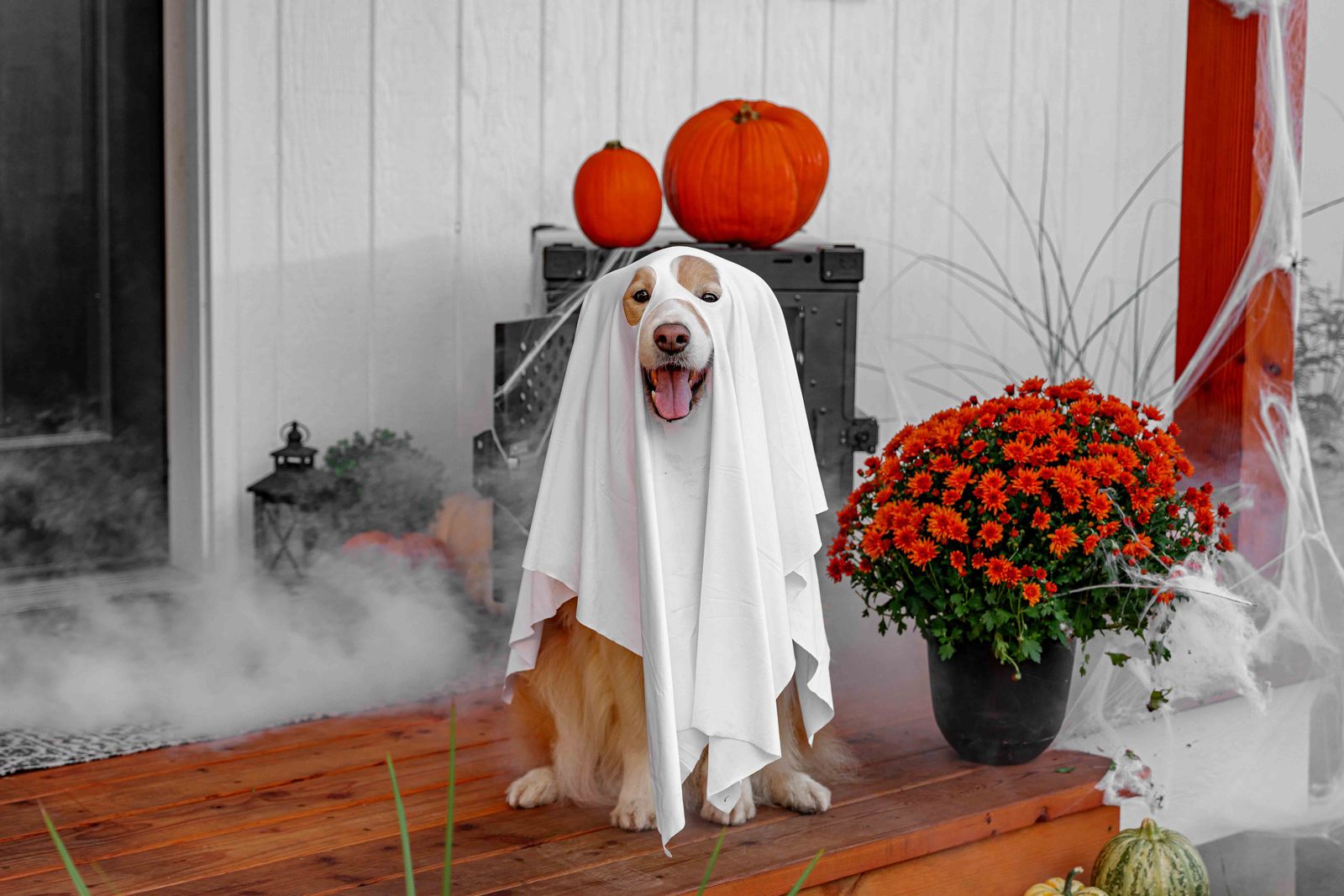
In second place is the hot dog, usually a sausage-shaped tunnel with leg holes and an embroidered mustard stripe on top. The same rule applies here: loose cut, no pressure on the neck. And in third place, the ghost is basically the most honest costume there is, a sheet with two holes for the eyes, done. No wonder it has held its spot in the top three so stubbornly for years.
Past the top three, the data gets thinner. The NRF survey doesn't publish exact percentages for the remaining spots, the survey is more reserved here than with its frontrunners. Still, two trends stand out clearly.
Farm animal costumes, sheep and cows above all, are showing up noticeably more often in 2026 on the shelves of large pet retailers than they did just two years ago. Probably because they're cut just as simply as the pumpkin costume: a soft fur wrap, no mask, no stiff collar.
The second trend isn't really a costume idea at all, it's a countermovement: no costume. Veterinary bodies like the AVMA and animal welfare organizations like the ASPCA have long recommended only putting a costume on a dog if it clearly tolerates it, and switching to alternatives like a bandana in pumpkin orange or ghost white otherwise. That advice seems to be sinking in slowly, and honestly, a photo of a dog wearing a simple bandana with a happy expression usually looks more appealing anyway than one with an unhappy look under a pumpkin hat. If you'd rather dress up yourself and just give your dog one small matching detail, the article Partner Costume With Your Dog has five ideas where a bandana is all it takes.
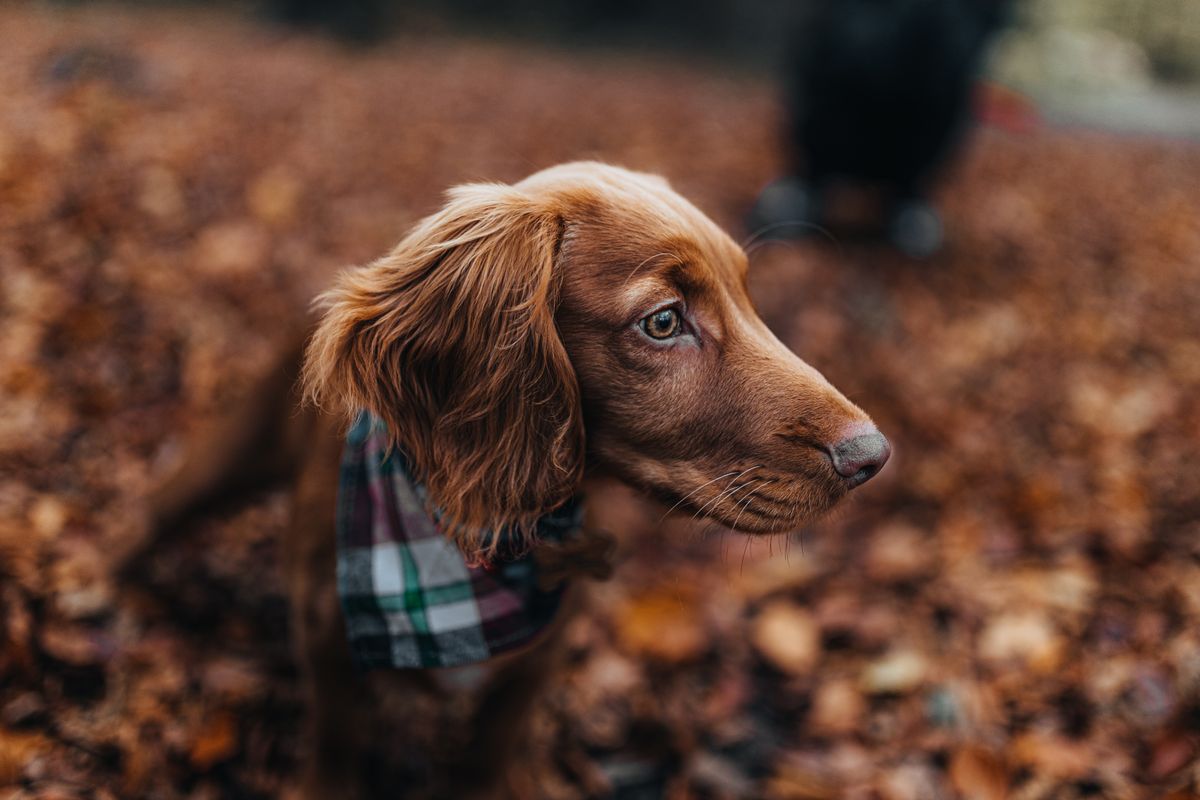
A dog costume should never restrict sight, hearing, breathing, the ability to open the mouth, or movement. Small parts that could be bitten off or swallowed need to be removed beforehand, and a dog should only wear a costume briefly and under supervision.
Typical signs that a dog is uncomfortable: a tucked tail, flattened ears, frequent lip licking or yawning, visible whites of the eyes, and suddenly stopping mid-walk. If your dog shows any of these, take the costume back off instead of holding out for the perfect photo. Dogs with thick coats overheat under a full-body costume faster than you'd think, so the rule is: short wearing times, ideally indoors, never unsupervised.
Which rank wins in the statistics is beside the point anyway. What matters more is whether your dog stays relaxed on October 31st. Pumpkin, hot dog, or just a nice bandana: capture the moment when he's strutting around in a good mood, those are the photos you'll still enjoy looking at years later. And if you're still figuring out how to spend the evening together this year: the Souldog article Dog-Friendly Activities has a few ideas for a relaxed autumn walk, costumes aside.
 Souldog