One snap at a wasp, and it's already happened. Most stings are harmless, but a few situations are a real emergency. Here is how to give first aid, remove a bee stinger the right way, and recognize when it's time for the vet right away.

It's buzzing over the garden table, your dog is watching with intense focus, and before you can step in, he snaps. A short yelp, then he licks his lip. A wasp sting is one of those classic summer scenes with a dog, and in the vast majority of cases it ends up fine. But a few situations are a real emergency where fast action matters. The difference comes down mainly to where the sting sits and how your dog reacts to it.
hen a sting is harmless and when it isn't, how to give first aid, why the question of bee or wasp matters, and what you should never do on your own: we'll go through all of it now, step by step.
If you're short on time, here's what matters most, upfront. A single sting on the body is usually harmless. It swells, hurts, and settles down on its own after a while. Cooling and watching is enough in that case.
It gets dangerous in three situations: a sting in the mouth, throat, or neck, a large number of stings at once, and an allergic reaction. A sting in the mouth can swell the airway shut, and an allergy can progress into a life-threatening shock. If your dog shows breathing trouble, strong swelling in the face, hives all over the body, vomiting, weakness, or collapse, go to the clinic at once without waiting.
The good news first: most wasp and bee stings are unpleasant but not dangerous. A painful swelling forms at the site, the dog licks it or limps briefly, and after a while it's over. You can treat this local reaction at home.
But there are three situations where things turn serious. The first is a sting in the mouth, throat, or neck. Since many dogs snap at flying insects, this happens more often than you'd think. The swelling there can narrow the airway, and that's dangerous regardless of whether the dog is allergic or not. The second situation is many stings at once, for example when your dog runs into a nest, because that adds up to a large amount of venom. And the third is an allergic reaction, which a single sting alone can trigger if your dog is sensitive to it.
For first aid, it's worth taking a quick look at what actually did the stinging. A bee stings only once. Its stinger has barbs, tears away from the body along with the venom sac during the sting, and stays lodged in your dog's skin. The bee dies afterward. The stinger left behind keeps pumping venom for as long as it stays in. A wasp, on the other hand, has a smooth stinger, doesn't lose it, and can sting multiple times in a row. It usually doesn't leave a stinger behind.
For you, that means: if a stinger is stuck in the skin, it needs to come out quickly, but the right way. And that's exactly where many people make a mistake that makes things worse.
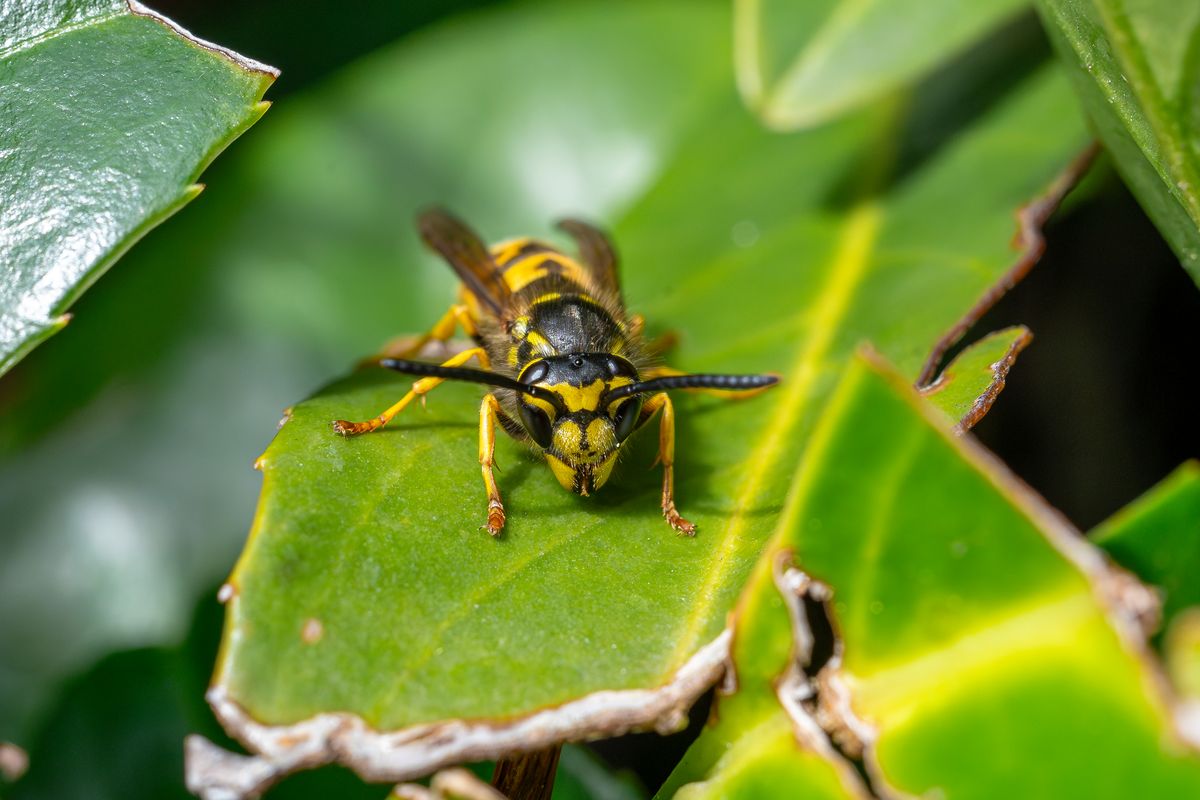
Scrape a bee stinger out sideways, never grab and pull it with tweezers. Push the stinger out sideways with your fingernail or the edge of a card. If you grab it with tweezers or your fingers, you squeeze out the venom sac still attached to it and press extra venom into the wound.
For a simple sting with no warning signs, you can help your dog yourself just fine. Stay calm, treat it, watch him. Here's how to go about it:
A sting in the mouth or throat, breathing trouble, or collapse mean: go to the clinic at once. In these cases, don't wait to see if it gets better, drive straight to the nearest vet clinic and call on the way. With a sting in the throat or an allergic reaction, every minute counts.
Go to the practice or clinic without hesitation if you notice any of these signs:
There's one detail worth knowing here, because it works differently in dogs than in us humans. In dogs, the liver and the gastrointestinal tract are the main shock organs, not the lungs. That's why, in a severe allergic reaction, vomiting and diarrhea are often the leading signs, while breathing trouble doesn't have to be the first one. So heavy vomiting shortly after a sting is also a serious warning sign.
It's tempting to reach for the medicine cabinet in an emergency, but this is exactly where caution matters.
Never give human medication without checking with the vet. An antihistamine or cortisone can be useful for a sting, but the active ingredient, product, and dose belong in the vet's hands. Many cold and combination medications for humans contain additives like pseudoephedrine or paracetamol that are toxic to dogs. There is no one-size-fits-all dose you should apply without checking first. When in doubt, call the practice first.
The same goes for home remedies. The only thing that's both useful and safe is cooling. We advise against onion, vinegar, or toothpaste on the sting site. Their effect on dogs isn't proven, and they can irritate the skin further. Toothpaste is also risky if it contains xylitol, which is highly toxic to dogs, especially since he will lick the spot. And raw onion is toxic anyway.
You can't fully prevent stings in summer, but a few habits cut the risk noticeably, especially for the dangerous stings in the mouth.
Keep your dog from snapping at wasps and bees, since that's exactly how stings in the mouth happen. Distract him or put him on the leash when a lot of insects are around. Cover food and sweet drinks while grilling or in the garden, and clear away fallen fruit, which draws wasps like magic. Take a quick look into the water bowl before your dog drinks, since wasps like to sit on the rim. And be careful with open glasses or cans outdoors that a wasp can crawl into, since an insect swallowed unnoticed can quickly sting inside the throat. Wasp nests near the house are best removed by a professional.
A wasp sting sounds scary at first, but it's usually not a big deal. You now have the essentials: you know a single sting on the body is usually harmless, that a sting in the mouth and an allergic reaction are emergencies, how to remove a bee stinger the right way, and why you shouldn't give medication on your own. Cool it, watch it, and go to the clinic at once if warning signs appear. That's really all it takes.
For an overview of all summer dangers, check out our full guide on how to protect your dog in summer. And if you like, Souldog helps you keep the most important emergencies within reach and quickly find the nearest vet practice if it counts. So you and your dog can enjoy summer in the garden and on the meadow, without a buzz turning into a worry.
 Souldog