An unassuming caterpillar sends dogs to the emergency vet every summer. The tricky part: your dog doesn't even have to touch it. Here you'll learn why the urticating hairs are so dangerous, how to recognize contact, and what really helps in the first few minutes.
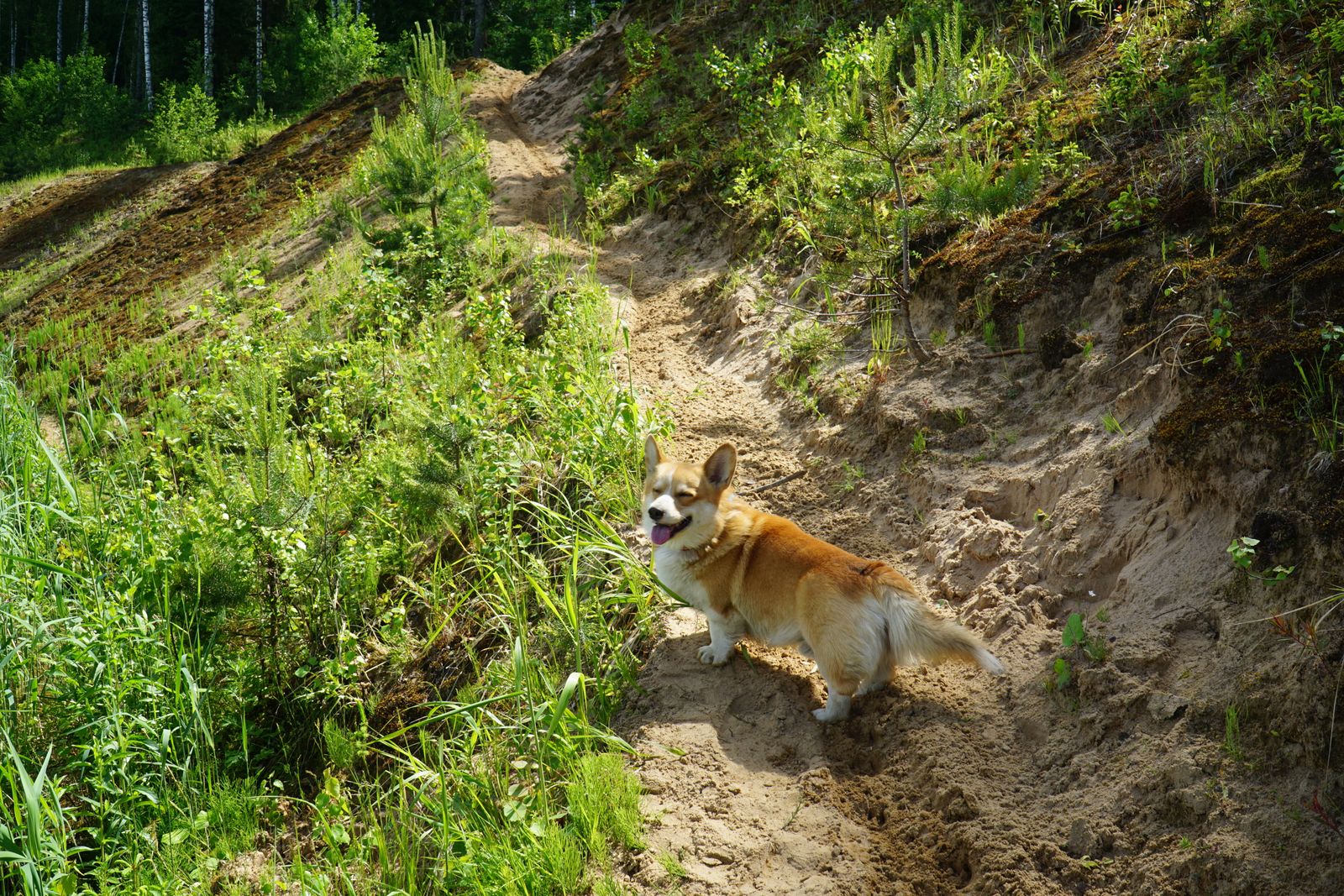
You're on your usual walk along the oak-lined avenue, your dog sniffing happily through the grass, and back home he suddenly starts drooling heavily and pawing at his muzzle. What looks like a minor thing can be the start of a real summer emergency: contact with the urticating hairs of the oak processionary caterpillar (in German: Eichenprozessionsspinner). This caterpillar is one of the underestimated dangers of the warm months, and the perfidious part is that your dog does not have to touch the caterpillar at all to develop symptoms.
he good news: if you know what to watch for and react quickly and correctly in an emergency, the prognosis is usually good. What the oak processionary caterpillar actually is, why its hairs are so treacherous, how to recognize contact, and what to do in the first few minutes, we'll go through step by step now.
If you're short on time, here's the most important part upfront. The oak processionary caterpillar is the larva of a night-flying moth. From a certain stage onward, it carries thousands of fine urticating hairs containing the toxin thaumetopoein. These hairs detach extremely easily, drift with the wind, and irritate the skin and especially the mucous membranes. Your dog does not have to touch the caterpillar, loose hairs are enough.
If contact occurs, fast action matters. Rinse the mouth and affected areas immediately with plenty of lukewarm water, never rub, and drive straight to the veterinary clinic. The first two hours after contact decide the risk of tissue damage. Even if the dog seems calm afterward, still set off at once and don't wait to see if it gets better.
Behind the unwieldy name is the caterpillar of a rather unassuming night-flying moth. The caterpillars live in groups on oak trees and move one behind the other in long lines, in what's known as a procession. Hence the name processionary. On trunks and thick branches, they build conspicuous silk nests that look whitish and silky at first and later turn brownish.
One common misconception first: the danger doesn't lurk only deep in the forest. The oak processionary caterpillar also thrives in tree-lined avenues, parks, cemeteries, schoolyards, and gardens, in other words exactly where many dogs are out and about every day. And with increasingly warm springs, it continues to spread across Germany.
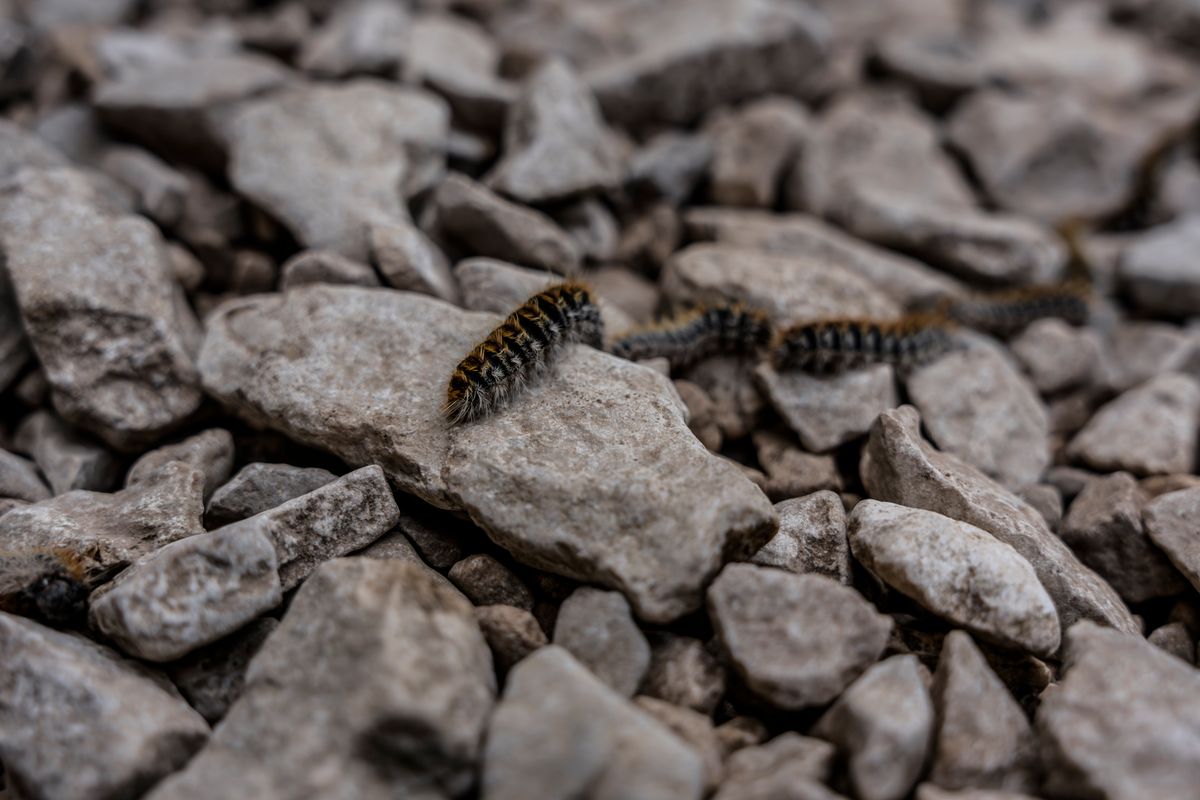
The real problem isn't the caterpillars themselves, but their urticating hairs. From the third larval stage onward, roughly starting in May, the caterpillar develops hundreds of thousands of these microscopically fine hairs. Each one is hollow, filled with the toxin thaumetopoein, and covered in tiny barbs. This combination is what makes them so unpleasant: the barb anchors the hair in the skin or mucous membrane, and the toxin triggers a severe irritation there.
Two things make this especially treacherous. First, the hairs detach at the slightest touch, are even actively shed by the caterpillar, and drift with the wind over long distances. Your dog does not have to touch the caterpillar, loose hairs are enough, whether in the grass, on the path, or in the air. Second, the hairs don't lose their effect quickly. Old, abandoned silk nests remain dangerous for months to years. The danger therefore doesn't end with the end of caterpillar season.
Unlike a classic allergy, this reaction doesn't require prior exposure. It's a direct irritation from the toxin and the barbs, so it occurs even on the very first contact. Because dogs sniff close to the ground and lick their fur, the hairs tend to land on the nose, lips, tongue, and eyes, exactly where, on the moist mucous membranes, they do the most damage.
Symptoms usually appear quickly, often within minutes. As an owner, what you'll typically notice first is around the muzzle. The dog suddenly drools heavily, shakes its head, paws at its muzzle, or rubs its face on the ground. The tongue and oral mucosa swell, redden, and can later show whitish coatings or dead, dark patches. In severe cases, the tip of the tongue can even die off. Difficulty swallowing and vomiting often follow.
If the eyes are affected, you'll see conjunctivitis with tearing and swelling. It becomes more serious when general signs appear: difficulty breathing, fever, marked lethargy, or an unstable circulation. A true allergic shock is possible but rare. The painful local reactions in the mouth are more common. Never wait to see which direction it takes.
Now comes the part you should know before you need it. If you suspect contact with the oak processionary caterpillar, every minute counts, and there's a clear order of steps. It's also important to know what not to do.
Rinse immediately with plenty of lukewarm water, never rub, then go straight to the clinic. Rinse the mouth and affected areas immediately with plenty of lukewarm water and never rub with a cloth. Rubbing only pushes the barbs deeper into the tissue. The first two hours after contact decide the risk of tissue damage, after that, drive straight to the veterinary clinic without delay.
Here's how to proceed:
Water bottle and gloves in your summer bag. If you're out and about in oak-rich areas during the season, you can rinse right away if things need to move fast.
The reason for the consistent vet visit is important to understand. A swelling in the mouth that initially seems harmless can increase over the following hours, and in the worst case it can impede breathing. That's why the vet examines the dog even if he has calmed down in the meantime. She can treat the irritation with anti-inflammatory medication and pain relievers, monitor the airway, and treat the wound if tissue has died.
And here's the reassuring part: with timely treatment, the prognosis is usually good. Even dogs with tongue necrosis usually recover, and lasting damage is the exception. In severe cases, however, dead tissue must be surgically removed, another reason to act early. That's exactly why acting quickly is so worthwhile.
The best emergency is the one that never happens, and with the oak processionary caterpillar, much of this is in your hands. It's mainly about avoiding the right places during the season and respecting nests.
Avoid infested oak stands, tree-lined avenues, and parks during the main period from May to July, and watch for warning signs or barriers put up by local authorities. Keep your dog on a leash there, so he doesn't wander into tall grass under oak trees. If you spot a silk nest, keep your distance and never touch it yourself. Report the find to the municipality or the local regulatory office, removal is handled by professionals with protective equipment. And if you've been in oak-rich areas during the season, check your dog's muzzle, paws, and coat when you get home.
Keep in mind that the danger doesn't end with the last caterpillars. Because old nests keep shedding urticating hairs for a long time, caution at known infestation sites remains warranted beyond the actual caterpillar season.
The oak processionary caterpillar sounds like a major scare, and in an emergency, it is. But you now have the essentials: you know why the urticating hairs are so treacherous, that your dog does not have to touch the caterpillar at all, how to recognize contact, and what matters in the first few minutes. Rinse instead of rub, gloves on, then straight to the clinic. And during the season, better to steer clear of infested oaks.
For an overview of all summer dangers, see our comprehensive guide on how to protect your dog in summer. Because danger can also lurk on the ground, it's worth checking out our post on grass awns in dogs. And if you like, Souldog can help you keep the most important emergencies at hand and quickly find the nearest vet practice if needed. So summer stays what it should be for both of you: the best time of the year.
 Souldog