On hot days, a cool lake becomes summer's biggest temptation. Sometimes, though, a danger you can't taste and often can't see is lurking in the water. Here's how to recognize blue-green algae, react correctly in an emergency, and keep your dog reliably protected.
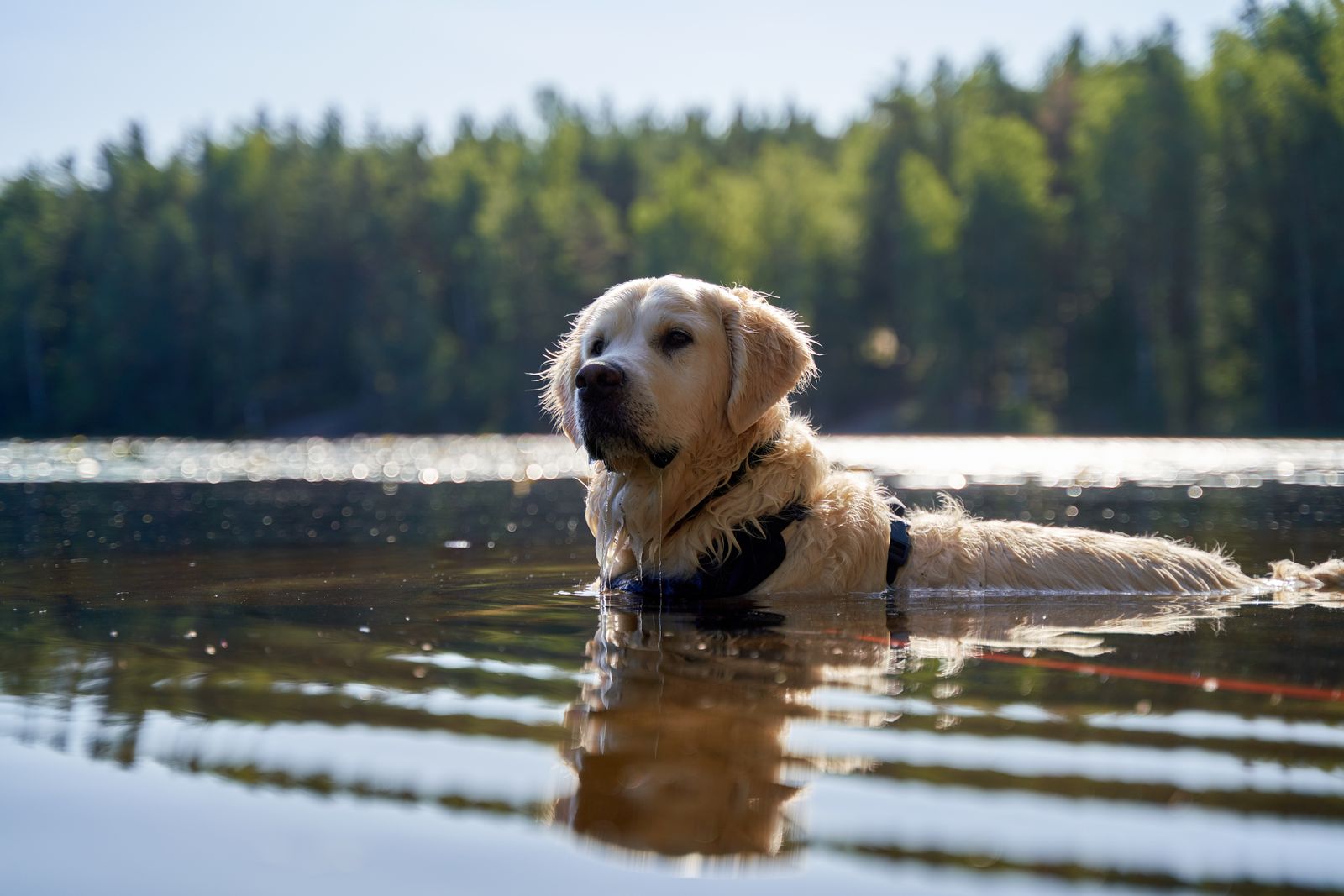
It's one of those days when the air shimmers and your dog is already hunting for shade after five minutes of walking. Then it appears: the lake, still and glassy and wonderfully cool. Your dog pulls at the other end of the leash, and honestly, who could blame him. This is exactly the scene where one of the most underestimated summer dangers for dogs lurks: blue-green algae. A swim, a mouthful of water, or even just licking a wet coat can turn into a life-threatening emergency, often faster than most people realize.
he bad news: there is no antidote to the toxins produced by blue-green algae. The good news: with a few clear mental pictures, you can recognize dangerous water, know exactly what matters in an emergency, and avoid ever ending up in that situation. Let's go through it step by step.
If you're short on time, here's what matters most, right up front. Blue-green algae aren't actually algae at all, they're cyanobacteria that multiply massively in warm, still water. Their toxins attack the nervous system and liver. Even small amounts can be enough, and your dog doesn't just ingest them by drinking, but also by licking a wet coat.
The most important rule: with any suspicion of blue-green algae poisoning, every minute counts, because there is no antidote. Get your dog out of the water immediately, rinse him thoroughly with clean tap water before he can lick himself, and drive straight to the vet clinic without delay. Even if he seems fine shortly afterward, a dangerous dose of toxin may already be in his body.
The name is misleading. Blue-green algae aren't algae at all, they're ancient bacteria known as cyanobacteria. That distinction might sound like pedantry, but it matters, because it explains why perfectly harmless-looking water can be dangerous. Cyanobacteria often drift invisibly in water and only become a problem once they multiply explosively. Experts call this an algal bloom.
These blooms need three ingredients: warmth, sunlight, and nutrient-rich, calm water. At water temperatures of around 20 to 25 degrees Celsius, the bacteria thrive, and still or slow-moving water such as lakes, ponds, and small pools provides ideal conditions. That's why the main season is clearly defined: high summer through early autumn, roughly July to September, is the riskiest time. And with increasingly hot summers, the problem is getting worse rather than better.
The real problem is the toxins that some of these bacteria produce. Broadly, there are two types, and both are dangerous in their own way.
The first are neurotoxins, chiefly anatoxin, which used to carry the grim nickname "very fast death factor." They paralyze the muscles, including the respiratory muscles, and they act frighteningly quickly. Early signs often appear just 15 to 60 minutes after contact, and in severe cases a dog can die within minutes. The second are liver toxins, above all microcystins. They attack liver cells and cause liver failure over hours to days. Vomiting and diarrhea are often prominent at first, with severe organ failure creeping in afterward.
Two things make blue-green algae especially treacherous. First, the dose-response curve is very steep: a dog can still seem completely fine shortly after contact and yet have already ingested a lethal amount. Second, there is no antidote. The vet can only treat the consequences and support the body, not neutralize the toxin itself. That's exactly why reaction time determines the outcome.
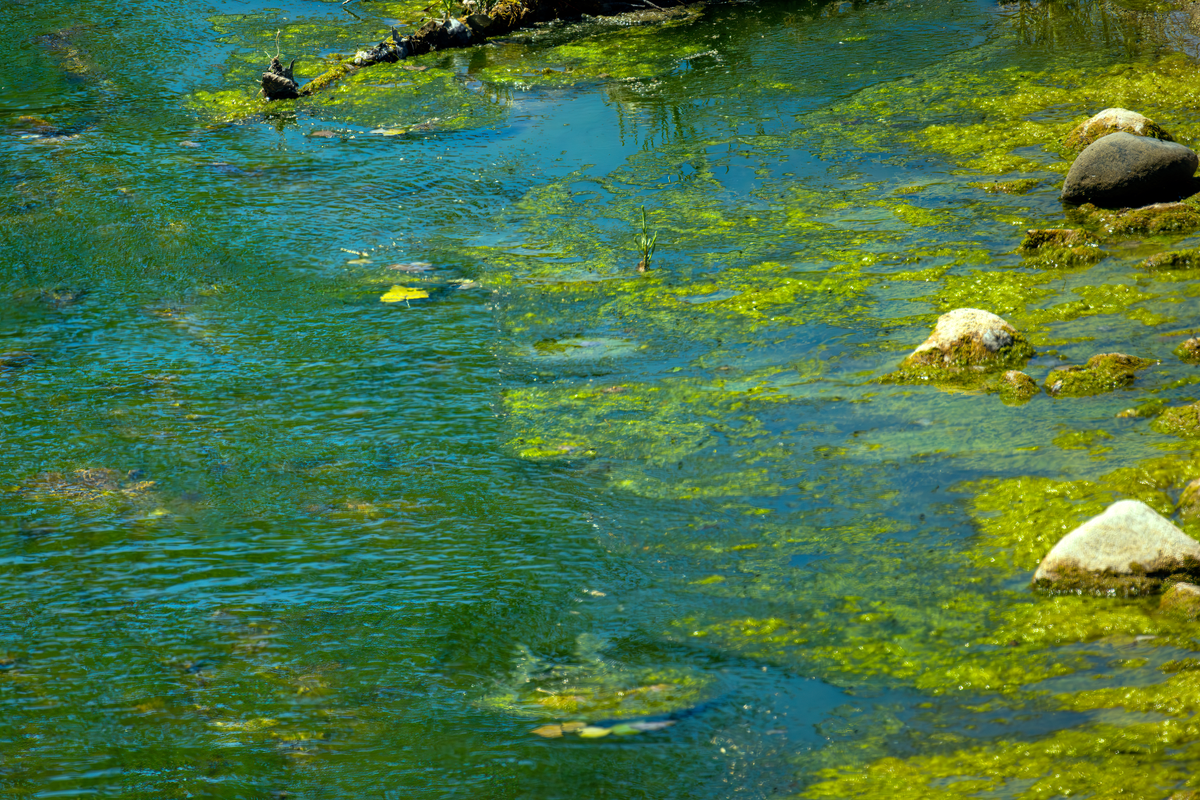
Contaminated water often looks as though someone tipped green paint into it. Typical signs are blue-green to toxic-green streaks, a cloudiness reminiscent of pea soup, and flaky or carpet-like accumulations pushed by the wind toward one shore. Sometimes a genuine foam forms. All of these are clear warning signs.
There's a catch, though, and it's an important one: appearance alone can't reliably tell you whether, or how much, toxin is in the water. Even clear or only slightly cloudy water can be contaminated. A tragic case in Berlin illustrated this when two dogs died at Lake Tegel from a neurotoxin produced by a species that typically occurs in clear, clean water. So don't rely on a smell test either. Some blooms smell musty and earthy, many toxic ones barely smell at all, and that earthy smell can even attract dogs instead of deterring them. In short, sight and smell are a precaution filter, not a safety guarantee.
Also pay attention to official notices. Designated bathing waters are monitored by health authorities in summer, and when a blue-green algae bloom occurs, warning signs go up or swimming is banned. Small ponds, puddles, and natural lakes, on the other hand, aren't monitored by anyone. There, you're relying entirely on your own judgment, and when in doubt, it's better to stay out one time too many.
When people think of poisoning, they usually think of drinking. That's one route, but far from the only one, and most people underestimate that. Your dog can absorb the toxins in three ways: by drinking from the water, by swallowing water while swimming and splashing, and by licking his wet coat and paws after a swim. That last route is often forgotten. A dog doesn't even need to gulp greedily from the lake, a swim followed by grooming himself can be enough.
That's why it helps to drop the idea that "a bit of splashing around is fine." There is no safe minimum amount. How much toxin becomes dangerous depends on the type of bloom, its concentration, and your dog's body weight, and small dogs are especially vulnerable. This isn't scare-mongering, it's the reason the rule for suspicious water is so simple and so strict.
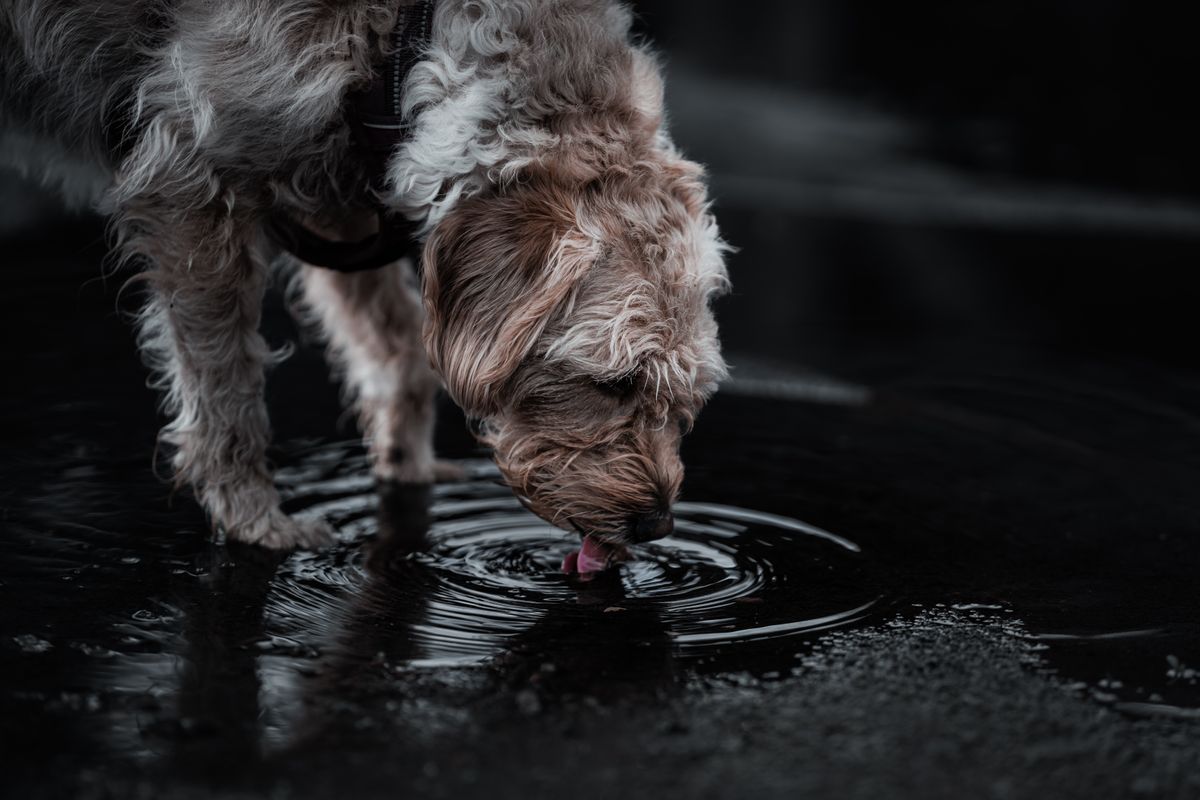
The tricky thing about blue-green algae poisoning is that the first signs can be nonspecific. What you as an owner typically notice first is excessive drooling or foam at the mouth, vomiting, diarrhea, and a dog who suddenly becomes weak or stumbles as if he's lost his balance.
What happens next depends on the type of toxin. When neurotoxins are at work, everything happens very fast: muscle tremors, noticeable stiffness, loss of coordination, seizures, and breathing difficulty up to respiratory paralysis. With liver toxins, the gastrointestinal tract dominates at first, followed later by weakness, pale or yellowish gums, and signs of circulatory shock. Never wait to see which direction it takes.
| Toxin Type | What to Look For | Time Frame |
|---|---|---|
| Neurotoxin | Drooling, muscle tremors, stiffness, stumbling, seizures, breathing difficulty | Very fast, often 15 to 60 minutes |
| Liver toxin | Vomiting, diarrhea (possibly bloody), weakness, pale or yellow gums, shock | Early signs come fast, liver failure develops over hours to days |
Now comes the part you should have in your head before you ever need it. If you suspect blue-green algae poisoning, there's no time to wait and no home remedy that solves the problem. The only correct response is fast, calm action, in this order.
No antidote exists, every minute counts. Get your dog out of the water immediately, rinse him thoroughly with clean tap water before he can lick himself, and drive straight to the nearest vet clinic without delay. Never induce vomiting or give activated charcoal on your own.
Here's what to do:
Always bring fresh drinking water. A full water bowl at the lake noticeably reduces the temptation to drink from the water itself.
Drive to the practice or clinic without hesitation if you notice any of these signs after contact with water:
It's important to understand why the vet visit applies even if your dog seems to be doing better again. The dose-response curve is steep, a dog that initially seems fine can still have ingested a critical amount. And liver toxins often only take effect over hours to days. A veterinary check is therefore not excessive caution, it's part of the treatment. The vet can't directly neutralize the toxin, but with fluids, liver support, anticonvulsants, and, in severe cases, ventilation, they can carry the body through the critical phase. The earlier this starts, the better the odds.
The best emergency is the one that never happens, and with blue-green algae, almost everything is in your hands. It comes down to a few simple habits that keep summer by the water safe without spoiling it.
Consistently avoid suspicious water. The moment a lake or pond looks greenish and cloudy, streaky, or foamy, a warning sign is posted, or you're unsure, your dog stays completely out, including for drinking. Bring fresh drinking water on every outing, that reduces the temptation to lap from the water. Rinse your dog with clean tap water after swimming in natural bodies of water, so he absorbs less if he licks himself. Before heading out, check whether there's a current bathing water advisory for your destination, many authorities post this online. And be especially watchful on hot, windless days, since that's exactly when the bacteria bloom the most.
One point many people overlook: the danger isn't only in the lake. Standing water in your own garden can also turn in summer, whether it's a garden pond, a rain barrel, or a bird bath. Especially for small dogs, it's worth keeping an eye on such water sources and offering fresh water from a bowl instead.
Blue-green algae sound like a nightmare topic, and in an emergency, they are. But you now have the essentials: you know what contaminated water looks like, why sight and smell aren't enough, which signs signal an emergency, and which small habits keep things from ever getting that far. Avoid suspicious water, bring drinking water, rinse off after swimming, and go straight to the clinic in an emergency. At its core, that's all it takes.
If you'd like, Souldog can help you keep track of things on hot days. In the first aid section, you'll find the most important emergencies ready at hand, the Discover map helps you find shady walks and water spots, and you can read how all the heat protection fits together in our big guide on how to protect your dog in summer. If you're looking for relaxed, risk-free cooling ideas, our article on cooling your dog down in summer has plenty of them. So that summer stays what it should be for both of you: the best time of the year.
 Souldog