When it's too hot for a normal walk, your dog still needs something to do. These ideas keep them busy indoors, help them cool down, and stay on the safe side.
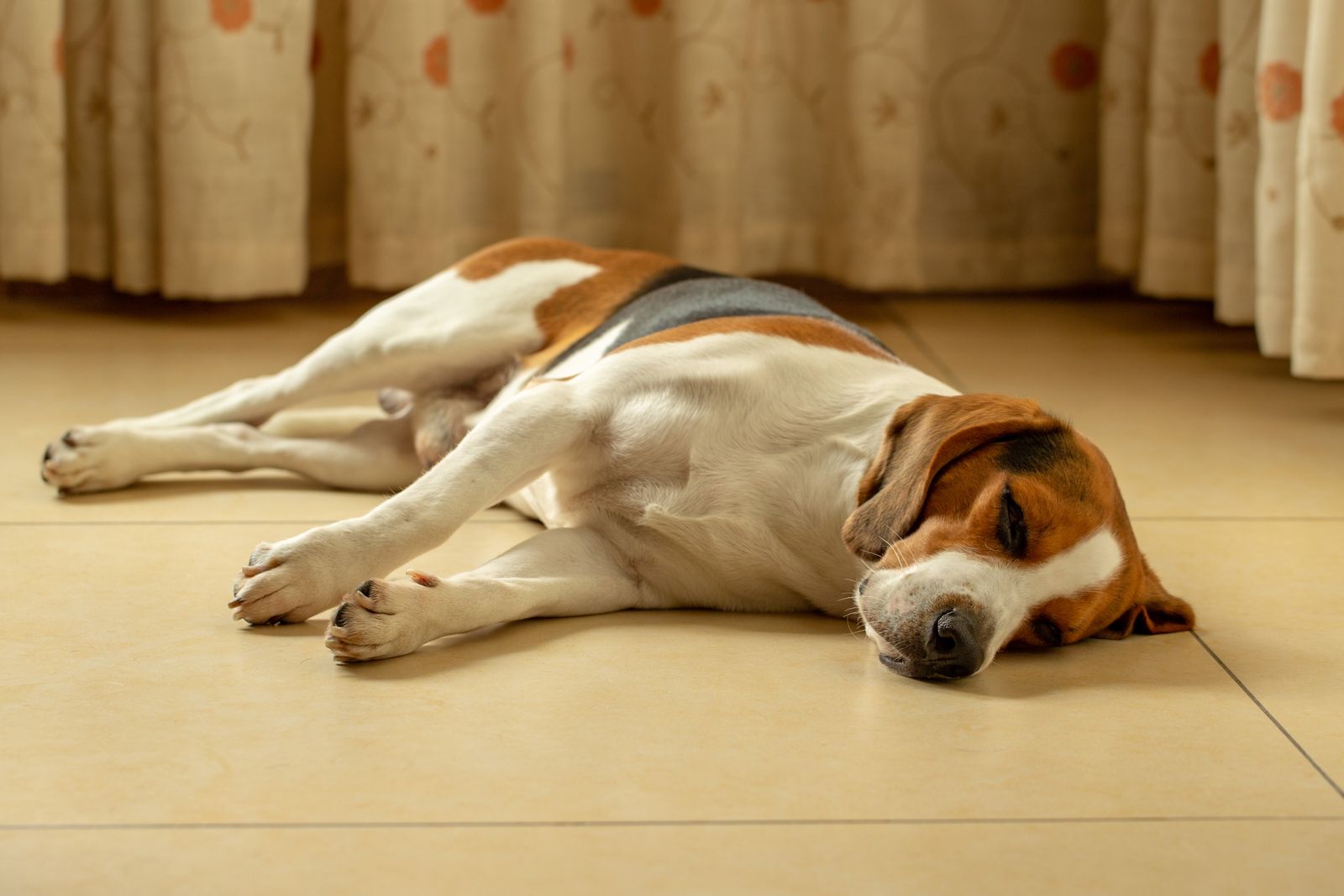
t's 90°F out, just after two in the afternoon. Your dog is sprawled flat on the kitchen tiles, the coolest spot in the house, and hasn't moved in an hour. Then, right on cue, they lift their head and look at you. Then the leash. Then you again. The classic look that says: well, now what? And there you sit with a guilty conscience, because heading outside right now is a bad idea, but staying in doesn't feel like enough for them either.
It can work, though. A hot day doesn't mean your dog has to die of boredom. It just means the activities look different than usual: quieter, cooler, more nose than paws. And the best part is that this calmer kind of mental work often leaves your dog more satisfied than yet another lap around the block. Let's sort out what actually helps on hot days.
On hot days, you shift exercise to the cooler edges of the day and swap the midday walk for calm mental work indoors. Sniffing games, food searches, and brain teasers tire your dog out without overheating them, since they barely need to move. And if your dog just wants to doze on a really hot day, that's perfectly fine too.
That last point matters more than it sounds. There's no fixed temperature that counts as "too hot," it depends on breed, age, weight, and fitness. But there's a common misconception that a dog needs the same amount of action every single day. In serious heat, doing less isn't laziness, it's common sense.
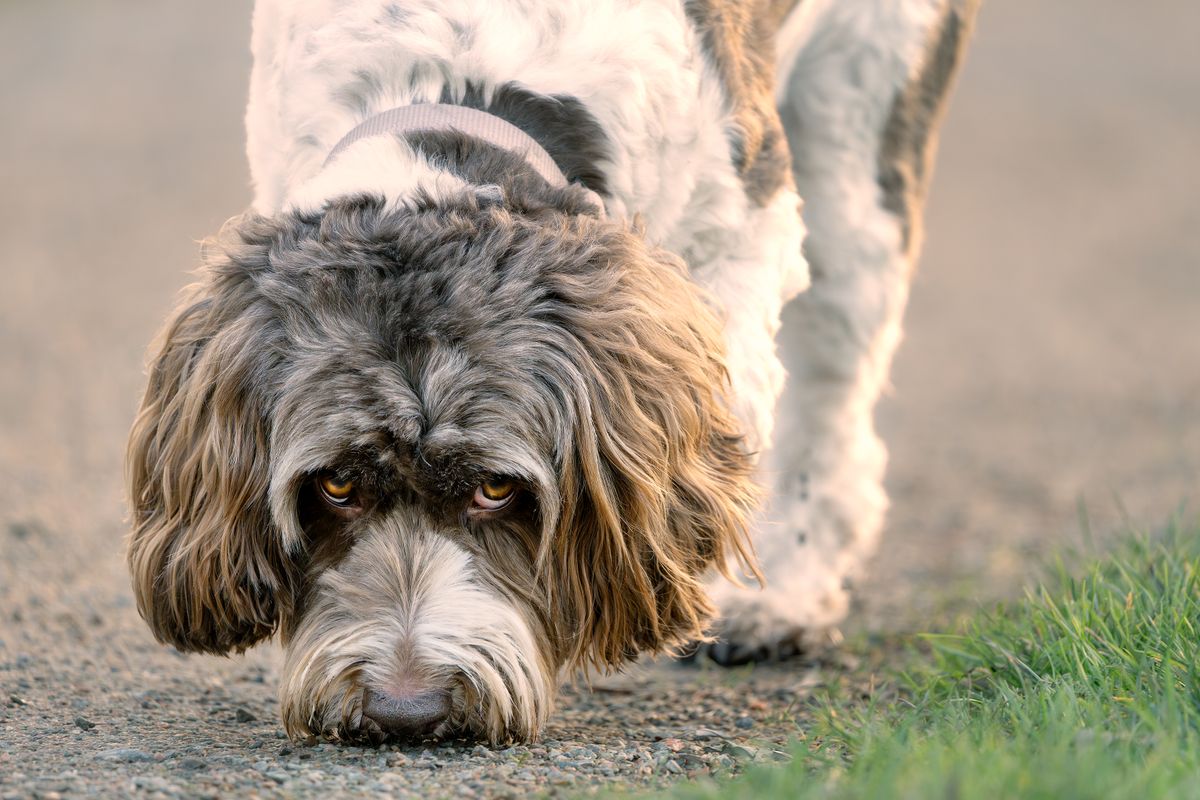
This is where the real secret to hot days lies. Trainers and behavior consultants have observed the same thing for years: a few minutes of focused sniffing or thinking work can leave a dog just as content and tired as a long walk. There's no hard data proving an exact minute-for-minute ratio, but the effect is impossible to miss in everyday life.
Why does this work? For dogs, smell isn't a side sense, it's their main way of experiencing the world. Depending on the breed, dogs have around 125 to 300 million scent receptors, compared to about five to six million in humans. When your dog puts their nose to work, a huge part of their brain fires on all cylinders while the body barely moves. That's exactly what you want in the heat: lots of mental effort, very little body heat.
There's a second effect too, one that's now been studied scientifically. In a 2019 study, dogs were measurably more optimistic after two weeks of nose work than a comparison group without any sniffing tasks. Another study found that scent stimulation can shift heart activity toward relaxation. The research here is still young, but the direction is clear: sniffing calms dogs down. And a calm dog handles a long, hot afternoon much better.
You don't need expensive gear or a training certificate. Most of these ideas work with things you already have at home.
| Activity | What it does | Effort |
|---|---|---|
| Scatter food around the room (sniffing search) | strong nose workout, calming | minimal |
| Snuffle mat or towel with treats rolled inside | searching and problem solving, longer engagement | low |
| Lick mat or stuffed Kong | long, calm licking, has a relaxing effect | low |
| Simple trick training (paw, roll over, touch a target) | mental work plus bonding, short sessions | low |
| Cups-and-boxes search game (which one is it under?) | brain teaser, impulse control | minimal |
| Let them sniff something new (herbs, a box from outside) | stimulation without exertion | minimal |
A few small habits make a real difference. Keep sessions short and stop while your dog is still having fun, not once they're frustrated. Mental work should relax them, not wear them out. And mix it up: the same task every day gets boring, a small change keeps it interesting. If your dog is allowed outside during the cooler edges of the day, skip the fast pace and go for a calm sniffing walk instead, letting them work their nose at their own speed. For more ideas on active days, check out our full guide to activities with your dog (German article).
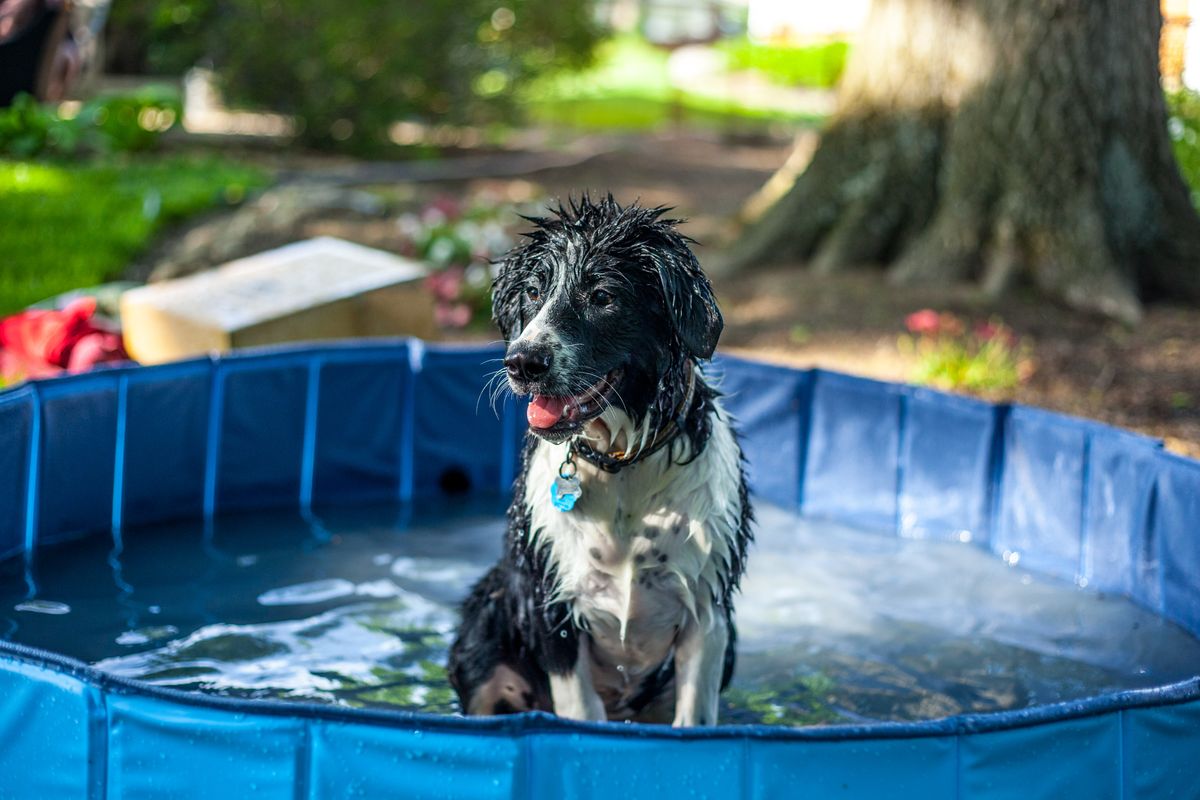
Cooling off pairs nicely with keeping your dog busy. A shallow paddling pool in the shade is a real highlight for many dogs, as long as you follow a few rules: stay with them the whole time, change the water regularly, never force your dog into the water, and let them get out whenever they want. Here's something few people know: if your dog fetches wildly in the water and keeps swallowing water while doing it, they can take in too much of it. This is a real risk especially for small and very active dogs, so limit how long they retrieve wildly in water and build in breaks. Dry their ears after swimming, since moisture in the ear canal encourages ear infections.
You can cool your dog down indoors too. Spread a lick mat with some wet food or lactose-free yogurt and freeze it for minutes of calm, cool entertainment. A stuffed Kong works the same way. Just watch the calories: a fully stuffed Kong can add up fast, so subtract it from the daily food ration and keep extras small. On really hot days, go for light, low-fat fillings, since heavy food generates extra digestive heat.
And then there's the whole ice cube thing. You've probably heard they're dangerous, shock, stomach problems, bloat. That's a myth. For a healthy dog, ice cubes or frozen treats are perfectly fine in moderation. Still, there are two real precautions: very hard, large chunks of ice can damage a tooth if a dog bites down hard on them, especially in older dogs, so crushed ice is the better choice. And as with any treat, watch how they swallow it. A cool tip from a recent study: after playing hard, many dogs voluntarily dip their heads into cool water, which measurably lowers body temperature. Offering a shallow container of cool water for them to dip into voluntarily never hurts, just don't force it.
One safety note that can be a matter of life and death: if you're using store-bought or homemade treats or peanut butter, check the ingredient list for xylitol (also called birch sugar). Xylitol is highly toxic to dogs, even small amounts can cause life-threatening low blood sugar and liver damage. Plain peanut butter with no additives is fine, anything with xylitol has no business anywhere near your dog. If you are ever unsure whether an ingredient is safe for dogs, a quick look at the poison list in the Souldog app helps.
Some things just aren't a good idea in serious heat, no matter how much your dog usually loves them. Sprinting after a ball in full sun is one of them: in the heat of the moment, hardly any dog stops on their own before overheating. A midday walk is off the table too, not just because of the temperature but because of the ground. Asphalt heats up dramatically and can burn paws. Try the seven-second test: press the back of your hand against the pavement and hold it there. If it's too hot for you, it's too hot for your dog's paws. Read more in our guide to paw protection in summer (German article).
And here's the most important part: a dog can overheat indoors too, if the home is hot and stuffy. Short-nosed breeds, overweight dogs, very young or old dogs, and dogs with existing health conditions are especially at risk. Also keep in mind that humidity is often more dangerous than heat alone, because panting cools less effectively in damp air. A moderately warm but humid day can actually stress your dog more than a hot, dry one.
So always make sure there's fresh water, shade, and some airflow, a fan works well for this. And a dog should never be left in a parked car on a hot day, not in the shade, not with a window cracked, not "just for a minute." The inside of a car can heat up to deadly levels within minutes.
During any activity, watch for warning signs: heavy, prolonged panting, excessive drooling, a very red tongue, restlessness, or weakness. Stop the activity immediately, move your dog to shade or a cool spot, and offer water. If stumbling, vomiting, disorientation, or seizures appear, it's an emergency: pour cool to cold water over your dog right away and get to a vet without delay. For details on why cold water is the right call here and how to recognize heatstroke, read our guide on heatstroke in dogs (German article).
Summer sometimes turns our dogs into different creatures: slower, sleepier, less eager for the big loop around the block. That's nothing to worry about, it's healthy instinct. Your job isn't to power through the heat with a packed schedule, it's to give your dog a few good, cool moments, a sniffing round through the living room, a frozen lick mat, then quiet again.
If you like, log what helps your dog on hot days in the Souldog app, so you'll have your own little collection of ideas ready by the next heat wave. And on the day your dog looks up at you again from the edge of their cool tile spot, you'll know: going outside isn't the only option. A little nose work and a cool treat make them just as happy.
 Souldog