The oldest designer dog is cheerful, eager to learn, and more high-maintenance than his teddy-bear coat suggests. What really lies behind his temperament, size, ear care, and cost, and what to watch for when buying a puppy.
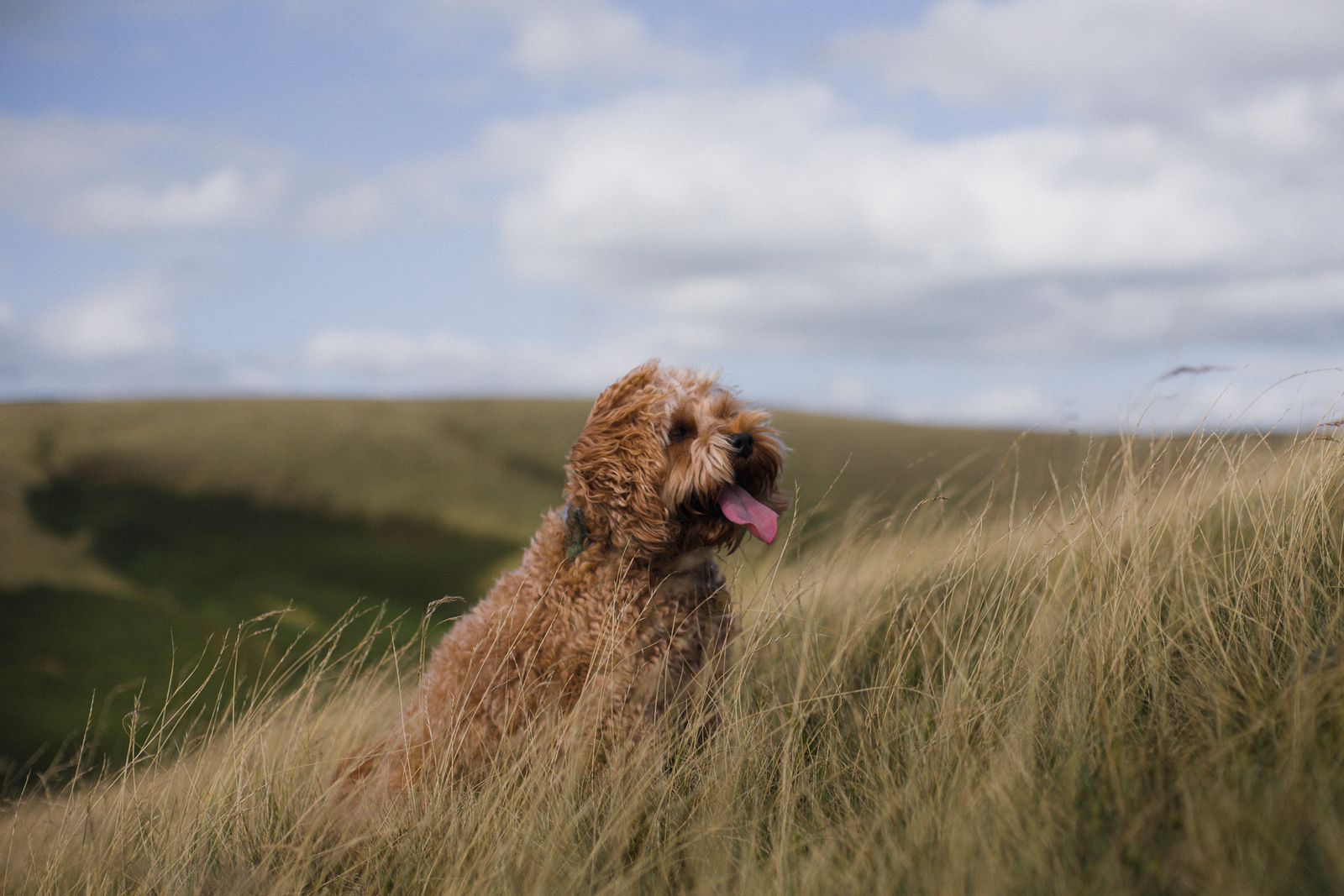
He's already wagging his tail before you've got the door all the way open, spins happily around your legs, and looks at you as if today were the best day of his life. The Cockapoo is a ray of sunshine on four paws, cheerful, cuddly, and surprisingly clever. No wonder this mix of Cocker Spaniel and Poodle has won over so many hearts. But as with any trendy dog, it's worth taking an honest look beneath the fluffy coat before one moves in with you.
n this guide, we'll go through what makes a Cockapoo a Cockapoo, step by step: size and temperament, the often underestimated energy level, his health topics including the infamous ears, and what he really costs. To see where he stands in the larger family of small curly-coated dogs, check out our overview of small curly-coated dog breeds.
| Trait | Details |
|---|---|
| Parent breeds | Cocker Spaniel x Poodle |
| Size | approx. 25-40 cm (depending on the Poodle parent) |
| Weight | approx. 5-11 kg |
| Life expectancy | usually 12-15 years |
| Coat | wavy to curly, sheds lightly, mats easily |
| Temperament | cheerful, eager to learn, people-oriented, eager to work |
| Status | designer mix, no FCI/VDH breed standard |
| Best suited for | active families, people with time for daily engagement |
A word on history, because it's what makes the Cockapoo special: the first Cocker Spaniel and Poodle crosses appeared back in the 1950s in the United States, roughly three decades before the Labradoodle. That makes the Cockapoo something like the forefather of all Poodle mixes.
Don't be fooled by pretty category names. Because the Cockapoo isn't a recognized breed with a fixed standard, there are no binding size classes, no matter what sales pages claim. A responsible answer is a range, not an exact number. If someone promises you a "teacup Cockapoo" with a guaranteed adult weight, that's a sales pitch, not a fact.
When searching for a Cockapoo, you'll run into abbreviations like F1 or F1b. These aren't jargon meant to impress, they tell you how the parent dogs are combined.
Important to note: a curly, low-shedding coat is more likely with an F1b, but nothing is guaranteed, and no generation makes a Cockapoo "healthier" or "hypoallergenic." Those labels are marketing, not evidence.
The Cockapoo is known as cheerful, affectionate, and eager to learn, a real ray of sunshine. What often gets overlooked: the Cocker Spaniel is originally a hunting dog, specifically a flushing spaniel bred to track game through the undergrowth and retrieve it. That love of work often lives on in the Cockapoo, too. He frequently brings more energy, nose-driven curiosity, and need for mental engagement than a pure lapdog.
For you, that means a Cockapoo doesn't just want a walk, he wants to use his brain too. Scent work, search games, short training sessions. An under-stimulated Cockapoo will find his own way to keep busy, and you usually won't like what he picks. How strong that drive to work turns out to be can't be reliably predicted in a mixed breed, since there's no standard. Still, you're better off not underestimating it.
Like many people-oriented companion dogs, the Cockapoo tends to dislike being left alone. So practice being alone early and patiently, before it becomes a problem. Our guide to leaving your dog home alone shows you how to make it work calmly.
Few Cockapoo traits deserve as much attention as his ears, quite literally. He often inherits the Cocker's long floppy ears, and underneath them, the Poodle's curly, dense coat. That combination turns the ear canal into a warm, damp, poorly ventilated chamber, in other words, the ideal environment for infections.
This isn't a niche risk, it's well documented. Dogs with drop ears have a significantly higher risk of ear infections, and the Cocker Spaniel is among the breeds where ear infections are especially common. In the Cockapoo, two unfavorable factors combine.
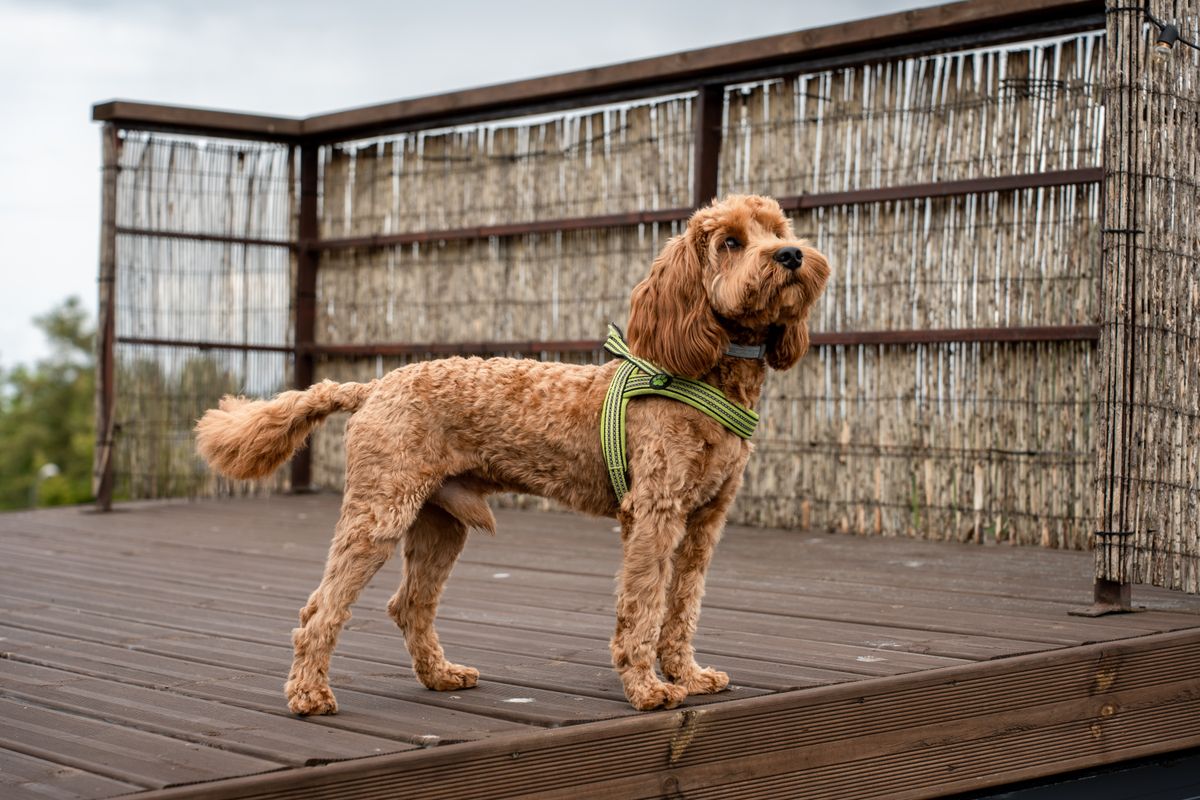
What helps is attention, not overzealous action. Check the ears regularly for redness, odor, and brown discharge, but don't clean inside the ear canal as a preventive measure. Fingers and cotton swabs have no business in the ear canal, they just push dirt deeper and can cause injury. Plucking hair deep inside the ear canal is controversial and can trigger an infection on its own, whereas trimming the hair around the ear opening is a good idea, so air can get in. If your dog shakes his head, scratches at his ear, or there's an unpleasant smell, he needs to see the vet. For more on telling a real ear problem apart from a harmless cause, read our guide to itchy ears in dogs.
Beyond the ears, the Cockapoo carries other health issues from both parent lines. The most important is prcd-PRA, an inherited eye disease that causes progressive blindness. It occurs in both Cocker Spaniels and Poodles, which is exactly why both parent dogs should be genetically tested for it. That's the single most effective health check there is, because it makes the risk clearly assessable.
From the Cocker Spaniel side, other eye issues like cataracts or glaucoma can occur, and in some lines, an inherited kidney disease for which a genetic test also exists. From the smaller Poodle side comes mainly patellar luxation, a slipping kneecap common in small breeds. A study of Toy Poodle puppies found this kneecap misalignment especially often, which makes it a real concern particularly for smaller Cockapoos.
Ask to see the prcd-PRA genetic test results for both parent dogs. A responsible breeder can provide results for both the Cocker and Poodle parent, plus an eye exam and a kneecap check. If these records are missing, so is your peace of mind.
And what about the myth that mixed breeds are automatically healthier? The largest study on Poodle mixes compared Cockapoos, Labradoodles, and Cavapoos with their parent breeds. The result: around 87 percent of health traits showed no difference. In Cockapoos, ear infections and itching were somewhat more common, while patellar luxation was less common. Health-wise, the Cockapoo is therefore neither a miracle dog nor a problem child, he falls within the range of his parent breeds. An older analysis of more than 27,000 dogs confirms this sober picture: of 24 hereditary diseases, ten were more common in purebreds, and only one was more common in mixed breeds. "Mixed breed equals healthier" simply doesn't hold up as a blanket statement.
The Cockapoo's wavy to curly coat sheds very little, and that's exactly where a misunderstanding comes from. "Sheds little" doesn't mean "hypoallergenic." One study found particularly high allergen levels in the coats of supposedly hypoallergenic breeds, Poodles included. No dog is guaranteed to be allergy-friendly. If you're sensitive, you should absolutely test your reaction to adult Cockapoos before bringing one home.
And there's a price for that low shedding: loose hairs don't fall out, they stay caught in the coat and mat. Without regular brushing, tangles down to the skin form quickly. For what this in-between grooming actually looks like, read our guide to coat care for Poodles, Maltipoos, and other curly breeds.
According to the Tierschutzbund (Germany's animal welfare federation), ongoing costs for a dog run roughly 1,200 to 1,350 euros a year, covering dog tax, insurance, food, and preventive vet care. For a Cockapoo, grooming comes on top of that. Since he's usually smaller than a large Doodle, the groomer bill tends to be a bit lower: budget around 55 to 95 euros per appointment every four to six weeks, so roughly 500 to 900 euros a year for coat care alone.
When it comes to the purchase price, the same rule applies as with every trendy mixed breed: a strikingly low price isn't a bargain, it's a warning sign. If you save money on a puppy because the parents weren't health tested, you often end up paying many times that later, say, for kneecap surgery or chronic ear treatment. The health checks that make a responsible puppy more expensive are exactly what saves you from follow-up costs and suffering.
Cockapoos aren't recognized as a breed by the VDH (Germany's kennel club), so there's no breed standard and no mandatory health testing. That makes it all the more important to look closely yourself. These warning signs point to a disreputable source or illegal puppy trading:
A good breeder shows you the mother and her surroundings, provides health records for both parent dogs, and gives you time to decide. That level of care is the best protection against nasty surprises.
Honestly summed up: a Cockapoo is a good fit for you if you're looking for a cheerful, active companion you can give daily exercise and mental work, if you're ready for regular coat care and ear checks, and if you consistently insist on health records for the parent dogs when buying.
He's less of a fit if you have little time for engagement, are away from home often and for long stretches, or are expecting a low-maintenance, easygoing dog. Behind that cheerful, shaggy exterior is a smart, hardworking dog with real needs. Meet them, and you get one of the most joyful companions there is.
The Cockapoo is a good-hearted, clever whirlwind who becomes the most loyal companion with the right engagement and care. If you want the full snapshot of his size, coat and health facts, our Cockapoo breed profile has it laid out in one place. If you understand his needs, pay attention to the parents' health when buying, and keep an eye on his ears, nothing stands in the way of a long journey together. And if you're still weighing which small curly-coated dog is right for you: in the Souldog app, you'll find breed profiles, health tools, and a community that's there to help with exactly these questions.
 Souldog