The Cavapoo looks like a living stuffed animal, but behind that teddy-bear coat are real issues: the Cavalier's heart, the coat lottery of the first generation, and ongoing costs that many people underestimate. Here is the honest overview.
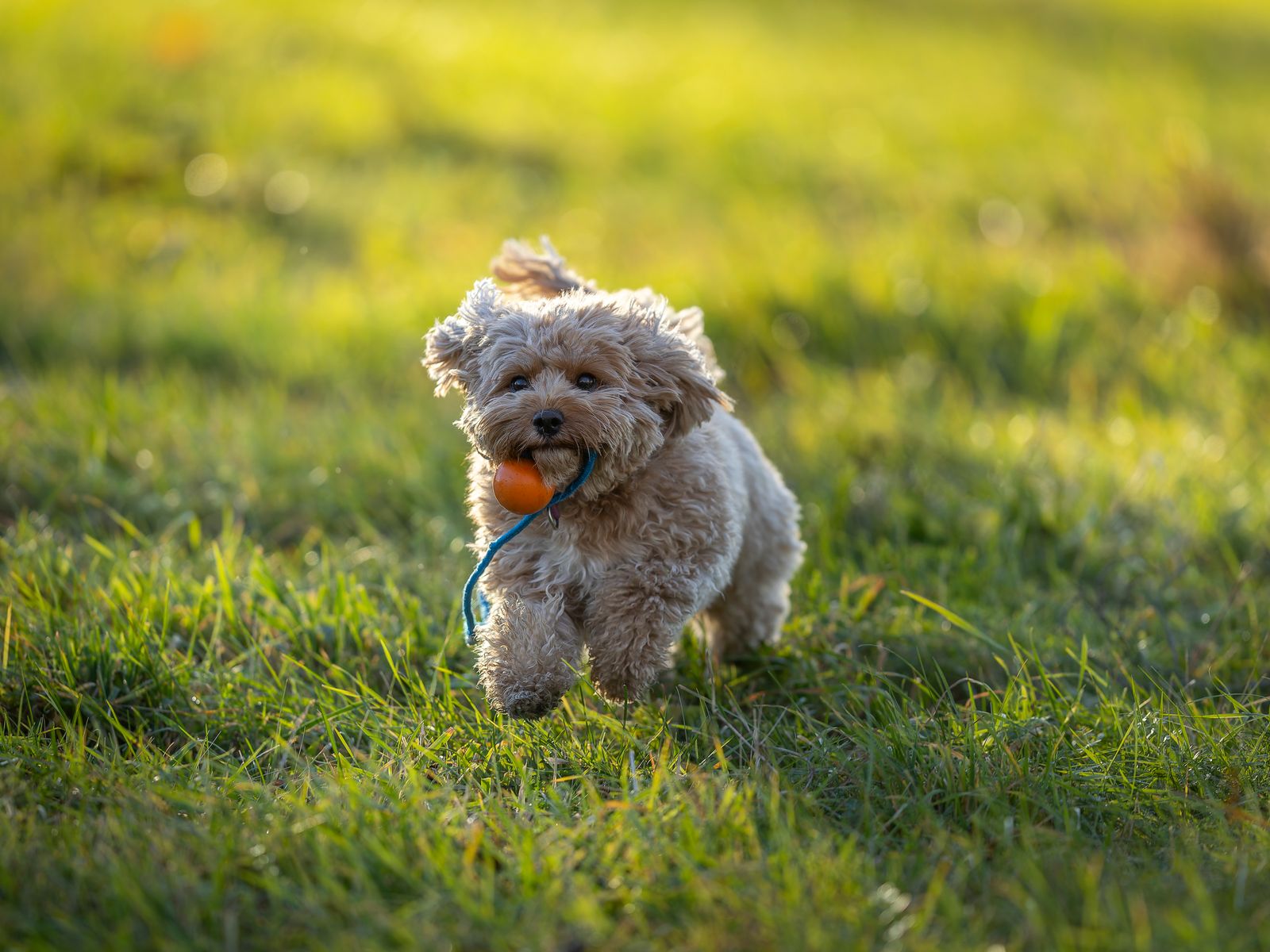
You spot him in the park and your heart skips a little beat: a fluffy ball of curls with button eyes that looks like a teddy bear brought to life. No wonder the Cavapoo is one of the most popular small mixed breeds around. But these trendy dogs are exactly the ones that deserve a second, honest look, because behind the adorable exterior are a few things no sales brochure will tell you.
hat is exactly what this guide does. We will look at how big a Cavapoo really gets, how he ticks, which health issues he inherits from his parent breeds, and what he costs over the years. We get specific, especially about the heart and the price tag. By the end, you will know whether this charming bundle of fluff fits your life. To see how he fits into the wider family of small curly dogs, check out our overview of small curly dog breeds.
| Trait | Details |
|---|---|
| Parent breeds | Cavalier King Charles Spaniel x Poodle (Toy/Miniature) |
| Size | approx. 28-38 cm (depending on the Poodle parent) |
| Weight | approx. 5-11 kg |
| Life expectancy | typically cited as 12-15 years (see Health section) |
| Coat | wavy to curly, often low-shedding, mats easily |
| Temperament | gentle, affectionate, playful, people-oriented |
| Status | designer mix, no FCI/VDH breed standard |
| Best suited for | families, active seniors, first-time owners with time |
The reason for this range lies in the parentage. The Cavalier measures roughly 31 to 33 cm and weighs about 5.5 to 8 kg. The Poodle, on the other hand, comes in several sizes, and that is exactly what tips the scale: a Toy Poodle stays under 25 cm and often weighs just two to three kilos, while a Miniature Poodle grows somewhat bigger. Because the Cavapoo mixes genes from both sides, the result varies. Even puppies from the same litter can turn out differently.
So if a breeder promises you an exact size down to the centimeter, be cautious. A reputable answer is a range, not a guarantee. How wide that range is, and why, has a lot to do with the generation.
Cryptic abbreviations circulate around Poodle mixes, and they are not marketing fluff. They actually tell you something real: they describe how the parent dogs are composed.
The takeaway: a curly, low-shedding coat is more likely with an F1b, but none of this is guaranteed. And claims like "F1b is hypoallergenic" or "F1 is automatically healthier" are pure sales talk without evidence. We will get to the allergy question shortly, because a stubborn myth persists there.
Because the Cavapoo is not a breed with a fixed standard, there is no guarantee of temperament. What we can talk about are tendencies from both parent breeds, and they send a fairly clear message. The Cavalier was bred for centuries as a companion and lap dog, and the Poodle is considered one of the most eager-to-learn dogs there is. This mix usually produces a gentle, highly people-oriented, playful small dog who loves to be included and picks things up quickly.
But that very devotion has a flip side you should know about. Dogs this closely bonded to their people tend to struggle more with being alone. Separation-related behavior is generally common in companion breeds. So here is the most important everyday tip, right up front: practice being alone from the very start, in tiny steps, long before it becomes urgent. A Cavapoo who never learned to relax on his own can genuinely suffer from it. For a calm, pressure-free way to build this up, see our guide on leaving your dog home alone.
Exercise needs are moderate. About 30 to 60 minutes of activity a day plus a bit of mental work keeps a Cavapoo well satisfied. He is no high-performance athlete, but he is not just a couch ornament either: the Poodle side wants to be kept busy.

Now for the most important section, so no sugarcoating. The biggest reason to look closely at a Cavapoo is the Cavalier's health legacy. This breed has two serious, well-documented problems, and crossing with a Poodle does not simply make them disappear.
The first is the heart. Mitral valve disease is the defining health issue of the Cavalier. About every second Cavalier has a heart murmur by around five years of age, and by old age, almost all of them do. In Cavaliers, this disease occurs many times more often than in other breeds, and it is the main reason Cavaliers live, on average, noticeably shorter lives than many small dogs. Because this heart condition is inherited through many genes, and the Cavalier contributes roughly half of the Cavapoo's genes, a Cavapoo is not automatically heart-healthy. The risk is reduced, but by no means off the table.
The second is neurological. So-called syringomyelia is common in Cavaliers: fluid-filled cavities in the spinal cord caused by a malformation of the skull. In a study of outwardly healthy Cavaliers, the rate rose from a quarter in the first year of life to around 70 percent by age six and older. A typical warning sign is "phantom scratching," scratching motions toward the neck and shoulder, often without any skin contact, along with sensitivity to touch around the neck. Whether crossing with a Poodle actually lowers this risk simply has not been studied for Cavapoos. A blanket all-clear would therefore be irresponsible.
Ask about the health screenings of the Cavalier parent. A heart-healthy, not-too-young Cavalier parent should have been examined by a cardiologist, ideally with a cardiac ultrasound. For the neurological side, there is an MRI screening protocol under a recognized scheme. If a breeder cannot provide these records, they cannot offer you any real assurance.
The Poodle side brings its own issues you should know about, too. In Toy and Miniature Poodles, the inherited retinal disease prcd-PRA is well researched and leads to blindness if untreated. The good news: there is a reliable genetic test for it. A responsible Poodle parent should be tested for this and should also have a current eye exam and a patella check on record.
Because the kneecap is the next topic, and it comes from both sides. Patellar luxation, a kneecap that slips out of place, is one of the most common orthopedic problems in small dogs. Small breeds are affected many times more often than large ones. On top of that come the classic small-dog issues: because of their small jaws, petite dogs are prone to crowded teeth, tartar, and gum inflammation. Regular dental care for a Cavapoo is not optional, it is essential.
What you can safely cross off your worry list: epilepsy and Addison's disease are often blamed on "the Poodle," but they are documented mainly in the large Standard Poodle, not in the small Toy and Miniature Poodles typically found behind a Cavapoo. That blanket attribution is misleading.
This is the most persistent sales pitch for every designer mix: that a mix is more robust, the so-called hybrid vigor. Research takes a more sober view, and for the Cavapoo, there are even solid numbers on it.
The largest study to date on Poodle mixes compared the Cavapoo, Cockapoo, and Labradoodle directly with their purebred parent breeds. The result: for about 87 percent of the health traits examined, there was no difference. Health-wise, the Cavapoo is therefore neither clearly better nor worse off than the Cavalier or the Poodle. A large analysis of over 27,000 dogs shows the same nuanced picture: of 24 hereditary diseases, ten were more common in purebreds, one in mixed breeds, and thirteen showed no difference. "Mixed breed automatically means healthier" is, in that blanket form, simply wrong.
The takeaway is not bad news, it is a clear one: what matters is not the label "mixed breed," but how healthy the specific parent dogs are and whether they were properly screened.
The curly coat that makes the Cavapoo so huggable is also his most high-maintenance feature. It often sheds little, but that is exactly why it mats easily: loose hairs stay trapped in the coat instead of falling out. Without regular brushing, dense mats down to the skin can form quickly.
Plan on a thorough brush-out at least every other day and a professional trim every four to six weeks. For what this in-between care actually looks like, and the five mistakes most owners make, see our detailed guide on coat care for Poodles, Maltipoos, and similar breeds. The key point here: this effort is not an optional extra, it is firmly part of owning a Cavapoo, both in time and in money.
Purchase prices are all over the place, from suspiciously cheap to four figures. So here is the single most important sentence about money: a low price is not a bargain, it is often a warning sign. If you save money on a puppy by skipping the parents' health screenings, you may end up paying many times that later. A kneecap surgery can easily cost several thousand euros per joint, and years of heart treatment add up just the same. The very screenings that make a responsible puppy more expensive are the ones that lower these downstream costs.
When it comes to ongoing costs, many people underestimate the grooming line item. A professional trim every four to six weeks adds up to several hundred euros over the year. Add food, dog tax, insurance, and veterinary care, and a Cavapoo realistically lands above the average cost of keeping a dog. He is a wonderful companion, but "low-maintenance and cheap" he is not.
Trendy mixes like the Cavapoo are a favorite target of illegal puppy trafficking. One point of context up front: Cavapoos are not recognized as a breed by the VDH (Germany's national kennel club). Technically speaking, pairing two breeds is breeding in the loose sense, not organized breeding under a kennel club's rules. That is not automatically bad, but it does mean there is no club oversight, so you need to look closely yourself.
Take these warning signs seriously:
A responsible breeder will show you the mother, let you see the conditions the puppies are raised in, provide health records for both parents, and never pressure you into anything. Take your time. It is the single most important investment you can make.
Let's sum up honestly. A Cavapoo is a good fit for you if you spend a lot of time with your dog and rarely leave him alone for long, if you are willing to brush several times a week and take him to a groomer regularly, and if you consistently insist on health screenings for the parent dogs when buying, especially for the Cavalier's heart. You can find the full rundown of size, weight and health facts in our Cavapoo breed profile.
He is less of a fit if you are often out of the house for long stretches, do not feel like doing daily coat care, or are looking for an "easy, cheap" dog. Behind that teddy-bear coat is an affectionate little companion with real needs. Anyone who understands and meets those needs gets, in return, one of the most lovable companions imaginable.
The Cavapoo is a charming, loving little soul who quickly becomes the center of the family. If you go into it with your eyes open, insist on the parents' health at purchase, and plan for the grooming effort, nothing stands in the way of a long life together. And if you are still not sure which small curly dog is the best fit for you: in the Souldog app you will find breed profiles, health tools, and a community ready to help with exactly these questions.
 Souldog