"Doesn't shed, super low-maintenance," the breeder said. A year later, the grooming salon knows you by your first name. Here's the honest math on doodle grooming: what matting really means, what groomer visits cost, and the routine that keeps your doodle out of the clippers.
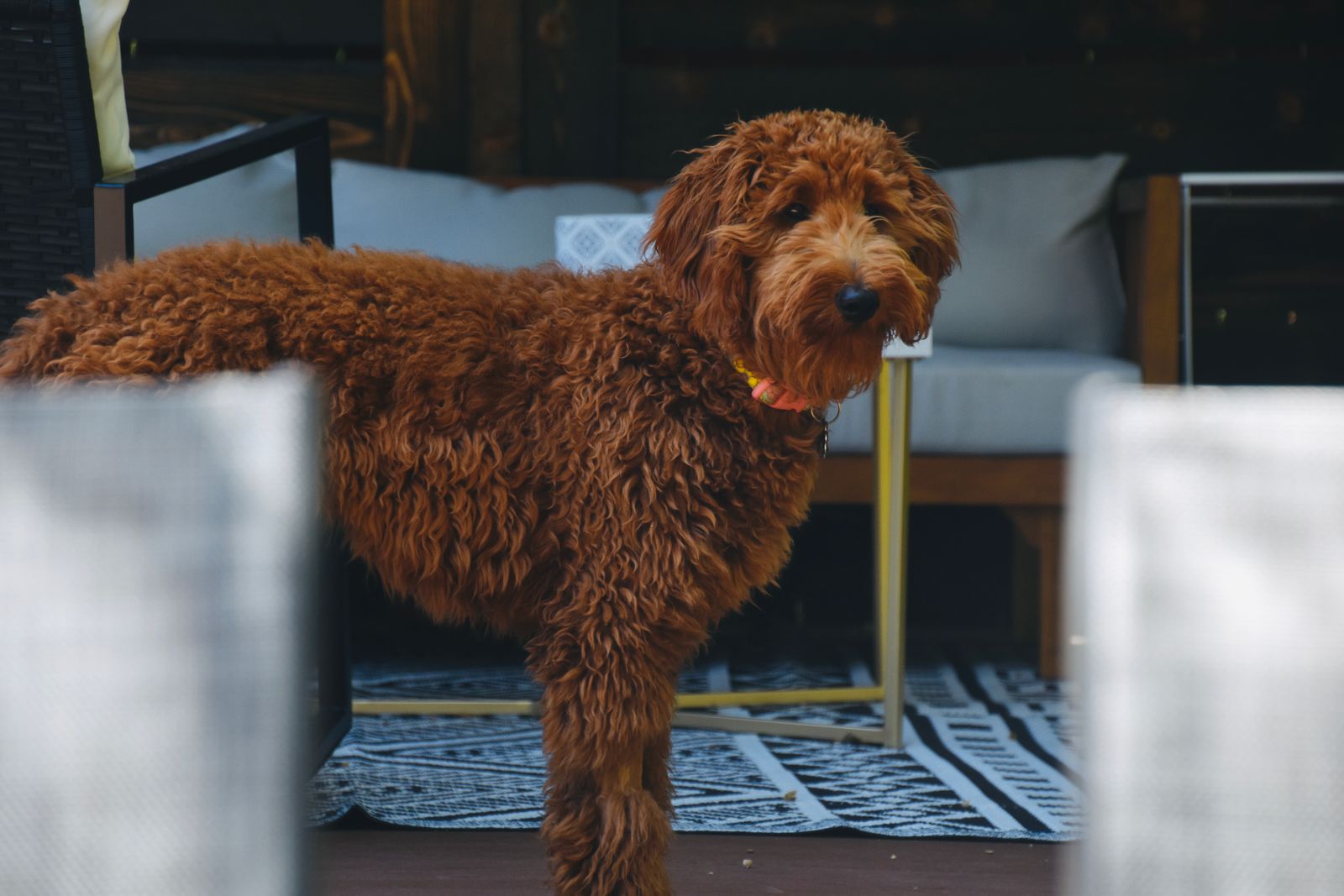
There's a sentence almost every doodle owner has heard: "He doesn't shed, he's totally low-maintenance." It usually gets said right before a fluffy puppy moves in. About eight months later, you're sitting on the bathroom floor with a metal comb, your Goldendoodle looks like a carpet washed on the wrong setting, and the next open slot at the grooming salon is three weeks out. Matting surcharge: not included yet.
o that this doesn't happen to you, or at least only happens once, let's do the honest math here. Not to talk you out of a doodle, quite the opposite: a well-groomed doodle is a wonderful dog. But "doesn't shed" is not a grooming discount. It's the opposite.
Doodles don't shed their loose hair onto your couch, they shed it into their own curly coat. There it tangles and forms mats that start at the skin and stay invisible from the outside for a long time. That's why "doesn't shed" means more grooming, not less: brushing down to the skin, anywhere from daily to several times a week depending on the coat, plus a professional groomer visit roughly every 4 to 6 weeks.
Cost-wise for a medium to large doodle: usually €70 to €150 per visit, which realistically adds up to €700 to €1,100 a year. The most critical phase is the coat change from puppy fluff to the adult coat, usually around 9 to 12 months. And if things do get seriously matted: a short clip is care, not failure.
The misconception is understandable. With a Labrador, you see the result of shedding on the carpet, with a doodle you don't, so the doodle looks like the easier choice. In reality, both dogs shed continuously. The only difference is where the old hair ends up: on the floor for the Labrador, in the coat itself for the doodle. There, the loose hairs and undercoat wrap around the curls, pull tighter with every movement, and turn into knots.
These knots form at the skin, not on the surface. That's why so many doodle owners are caught off guard: from the outside, the coat looks fluffy and neat, while underneath, a solid layer of mats is forming. Brushing only the top coat is, in effect, just tending the facade. In extreme cases, this turns into what's called a pelt, where a comb can no longer reach the skin at all and only a clip-down will help.
Matting isn't a cosmetic problem. Mats tug at the skin with every movement, moisture gets trapped underneath, skin infections and hot spots develop, and parasites find the perfect hiding place. A badly matted dog is in pain, even if he bears it bravely.
While we're on myths: "hypoallergenic" deserves scrutiny too. One study found that supposedly allergy-friendly breeds, Labradoodles included, had no fewer allergens in their coat than other dogs, in some cases even more. If you have allergies, spend time with the actual dog before bringing him home, rather than relying on the label. You can read more about the coat lottery in poodle mixes in our full overview of small curly dog breeds, because which coat type turns up in a doodle litter is decided by genetics, not the sales flyer: from tightly curled poodle coat to shedding mixed coat, everything is possible within the same litter. One clue is the breeding generation: in an F1 doodle, retriever crossed directly with poodle, the coat can lean heavily toward the retriever and shed accordingly. Only the backcross to a poodle, called F1B, delivers the dense curly coat more reliably, and that exact coat is the one that mats fastest.
Now for the math that rarely comes up when you're picking out a puppy. A doodle with a curly coat needs a professional visit, bath, trim, nails, ears, roughly every 4 to 6 weeks; only with a looser, wavy coat can you stretch it toward 8 weeks. (A quick note: the prices below are for Germany, where Souldog is based; US groomers for large doodles typically run a similar range in dollars.) Prices vary by region, salon, and coat condition, usually higher in big cities and lower in rural areas. The €70 is the entry point for smaller mini doodles and simple trims; for a full-grown Goldendoodle you'll usually land in the upper half of the range. For a standard-size Goldendoodle or Labradoodle, German salon price lists usually look something like this:
| Item | How Often | Cost |
|---|---|---|
| Full groomer visit (bath, trim, nails, ears) | every 4 to 6 weeks | €70 to €150 per visit |
| Matting surcharge | depending on condition | €10 to €60 extra |
| Basic at-home kit (slicker brush, metal comb, nail clippers, shampoo) | one-time | €50 to €100 |
| Clippers for in-between trims | one-time, optional | €50 to €290 |
| Total cost per year (9 to 11 visits) | ongoing | around €700 to €1,100 |
For comparison: year after year, that's roughly what food costs for a medium-sized dog. If you know this number before bringing a puppy home, you can budget for it calmly. If you don't, you'll eventually start skimping on the groomer, and that's exactly when it gets expensive, because a matted dog needs special treatment or a clip-down, and both cost more than the routine visit you skipped.
You can still save money, just in the right place: consistent at-home brushing that avoids matting surcharges, a shorter cut that stretches out the intervals, and, if you're handy, taking on in-between trims yourself. What you shouldn't cut back on is the rhythm itself.
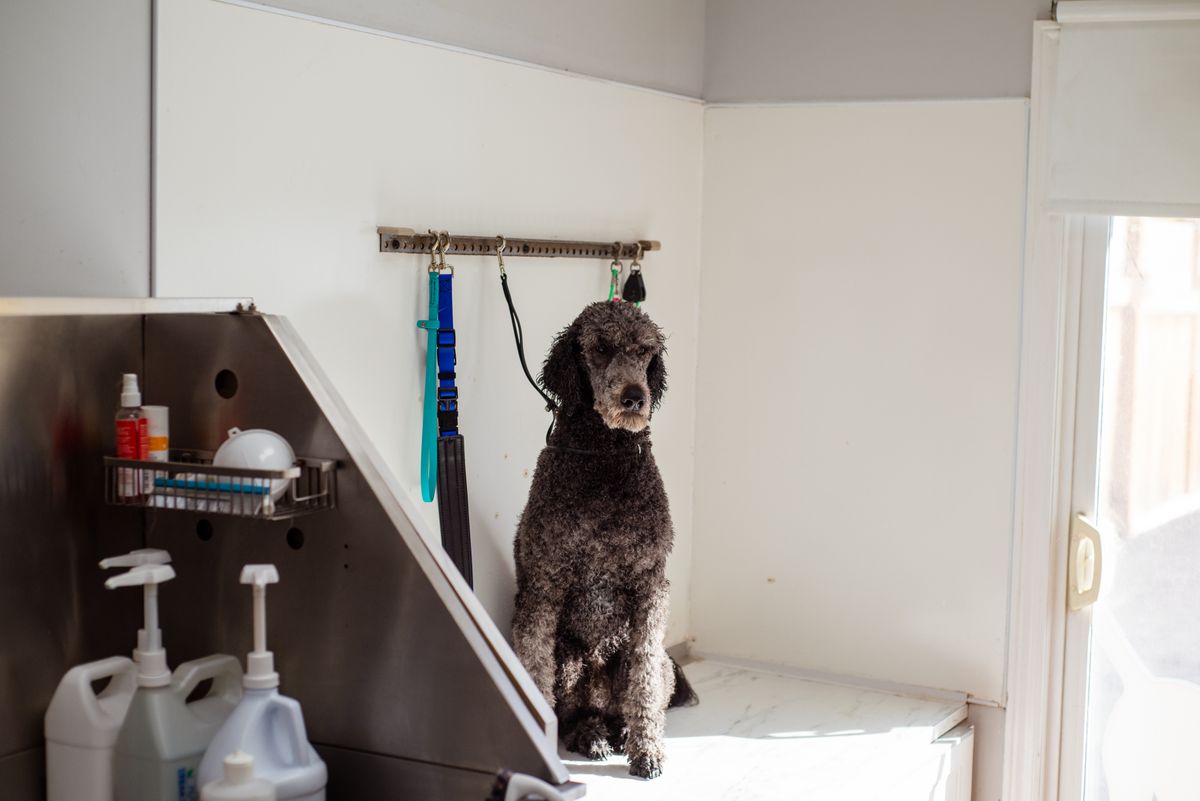
The good news: at-home grooming isn't rocket science, it just has to be done right. The magic word is layer brushing. You part the coat with your hand until you can see the skin, then work your way section by section, from bottom to top, with a slicker brush and a metal comb. That's how you reach the zone where mats form. Five minutes of swiping over the top coat feels like grooming, but it never reaches that zone.
Whether you were thorough shows up in the comb test: a metal comb has to glide down to the skin without resistance everywhere, including behind the ears, in the armpits, on the inner thighs, and wherever a harness or collar rubs. Matting almost always starts exactly at those friction zones. How often the routine is due depends on the coat: tight curls daily, wavy coats at least three to four times a week. Added up, that's several hours a week, and it's more honest to know that going in. If you like, add a dog dryer, often called a blower, to the brushing routine: the airflow pushes loose undercoat out of the coat before it can tangle.
There are two mistakes you should also know about. First: bathing a matted dog makes everything worse, because water tightens the knots like a wool sweater on a hot wash. Brush out completely first, then bathe. Second: cutting mats out is dangerous, the skin is often lying right inside the knot. Leave that to the professional. You'll find the full step-by-step routine, including ear, eye, and paw care, in our post on coat care for Poodles, Maltipoos and other curly breeds, it applies just as much to large doodles.
Practicing early pays off twice over. Get your doodle puppy used to the brush, comb, and dryer noise playfully from the start, and book his first short meet-and-greet at the salon while he's still a puppy. A dog who knows grooming as normal makes every future visit easier, for him and for your wallet.
If there's one single thing in this article worth remembering, it's this. Between the sixth and fourteenth month of life, for most doodles around the ninth to twelfth, your dog trades his soft puppy coat for the denser adult coat. The old hair doesn't just fall out. It gets caught in the coat growing in underneath, everywhere at once.
More doodles mat during this transition than at any other point in their lives, often within a few days, while everything still looks fluffy on the outside. Many first full clip-downs trace back to exactly these weeks. The countermeasure isn't glamorous, but it works: during the coat change, you brush in layers every day, the comb test becomes part of the evening routine, and groomer visits move closer together. Many groomers also recommend scheduling the first proper haircut before the big transition, so your dog already knows the clippers and dryer when it matters. It's a few demanding months. After that, it becomes manageable again.
In the end, doodle grooming comes down to a simple choice, and both answers are correct. Option one: the long teddy-bear look from your Instagram feed. It's gorgeous, and it costs you several hours of brushing a week, no negotiating that. Option two: a shorter cut. It takes away the coat's tendency to mat, stretches at-home grooming down to a manageable, everyday amount, and looks just as charming on a doodle.
Whatever you decide, decide it actively rather than by putting it off. The third option, long coat without the time for it, always ends the same way: at the groomer, under the clippers, with a guilty conscience. And if it does come to that, don't be too hard on yourself. The rule of thumb in the industry is that the dog's wellbeing comes before looks: a clip-down isn't a failure then, it's the kindest solution for the dog. Coat grows back, pain from matting doesn't have to happen.
A doodle is not a low-maintenance dog. He's a wonderful dog with a coat that demands a plan: a brushing routine, a fixed groomer rhythm, and a budget you know before the puppy moves in. Know that, and there are no nasty surprises, just a dreamily soft dog and a clean couch to go with him. Not sure a doodle is the right fit? Our dog breed directory lays out the full range of breeds, and the dog breed quiz gives you a personalized starting point.
Souldog helps you stay on top of it: add your doodle in the app and log grooming appointments and observations, from the first brushing session to the next salon visit. That way, what's left of the breeder's sentence is the part that's actually true: not low-maintenance, but worth every minute.
 Souldog