When thunder rolls, some dogs tremble under the table, and their humans feel just as helpless. Here you'll learn why thunderstorm anxiety is so persistent, why comforting your dog is not a mistake, what helps in the moment of panic, and what actually changes things long term.
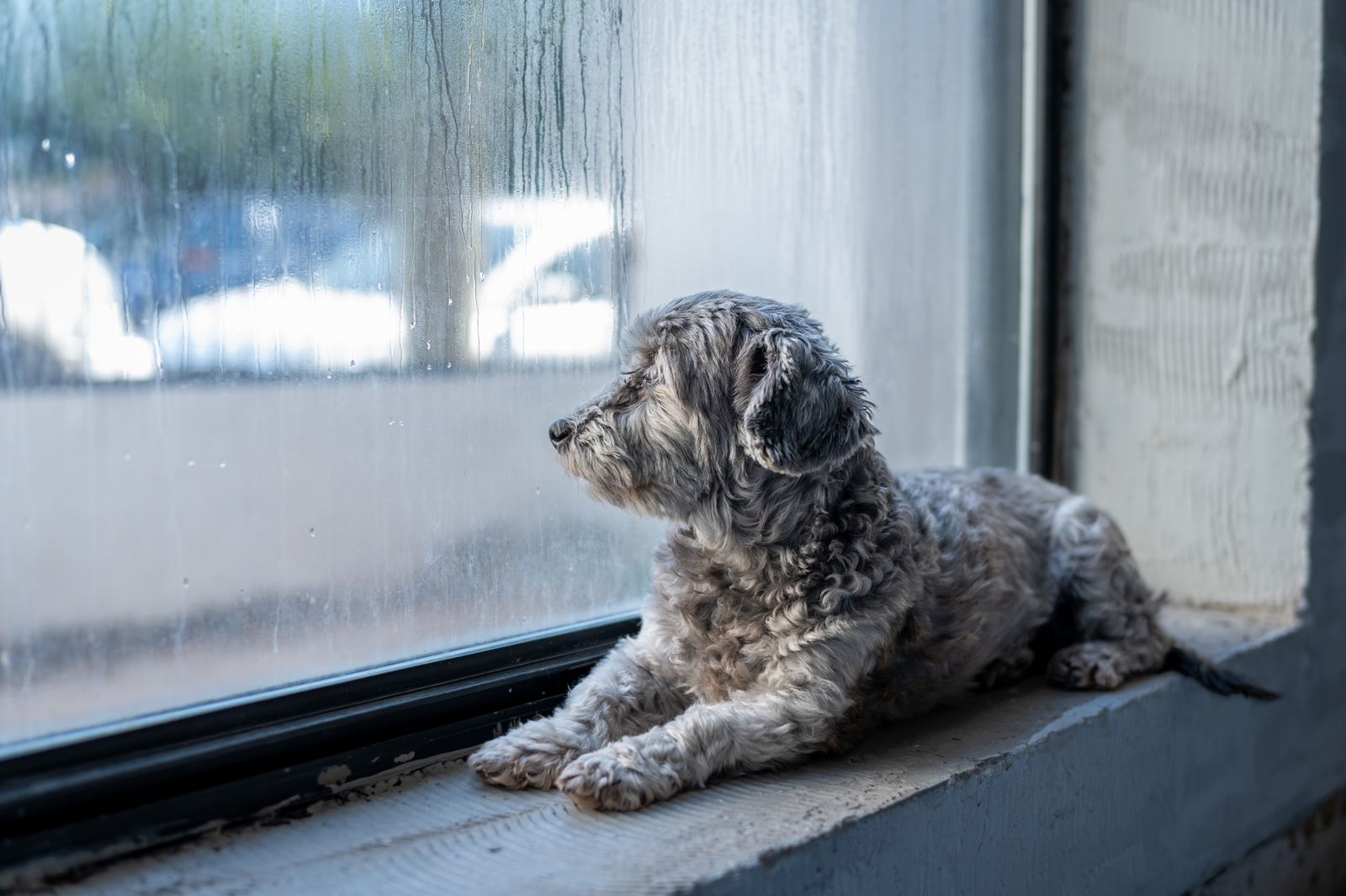
The afternoon sky turns a leaden white, a first distant rumble of thunder rolls in, and your dog, perfectly relaxed just moments ago, suddenly turns into someone else. He pants, clings to your leg, hides behind the couch, or scratches frantically at the door. For many dog people, this scene belongs to summer just as much as the storm itself, and they often feel just as helpless as their dog.
he good news: you can help your dog, more than most people think. And you can set aside one worry that has been passed around for years without merit, namely the fear that comforting your dog will make the panic worse. Let's take a calm look at why thunderstorm anxiety is so persistent, what helps in the moment of panic, what actually changes things long term, and when it's time to bring in the vet.
If you're short on time, here's what matters most. Thunderstorm anxiety is common in dogs and is not a character flaw, it is a genuine anxiety disorder. It is so persistent because a thunderstorm is made up of many different triggers at once: thunder, lightning, wind, rain, a dark sky, and shifts in air pressure and scent.
Comforting your dog is allowed, and it's the right thing to do. Calm attention does not reinforce the fear, that's an outdated myth. In the moment of panic, a safe hiding spot, dampened noise and light, and your own calm presence all help. Long term, what actually changes things is targeted training over months, supported by your vet. If your dog shows severe panic, injures himself trying to flee, or the fear gets worse year after year, it belongs in professional hands, and effective medications are available too.
Many people think of thunder first when it comes to thunderstorm anxiety. But thunder is only part of the picture. From a dog's point of view, a storm announces itself through many early signs: the sky darkens, the wind picks up, the air smells different, air pressure shifts, and eventually lightning and thunder join in. A bright flash of lightning can even briefly blind a dog. Because so many triggers arrive together, behavioral veterinary medicine calls this a multisensory fear.
This is exactly why thunderstorm anxiety is considered harder to treat than a pure noise fear, such as fear of fireworks. Fireworks are, at their core, an acoustic event that can be recreated fairly well with sound recordings. A thunderstorm, on the other hand, can never be fully captured by a thunder recording alone, the dog is still missing the wind, the light, and the air pressure he also reacts to. Not every noise-sensitive dog has thunderstorm anxiety, by the way, but a dog who shows one often develops the other as well.
Static buildup: an interesting idea, but not proven. The theory that dogs suffer from static buildup in their coat during a storm, and therefore seek out grounded spots like the bathtub, is a well-known one. But in the only controlled study on the topic, a special anti-static cape performed no better than an inert placebo cape. The benefit people observe is more likely explained by gentle pressure and attention, not by grounding.
Fear shows up a little differently in every dog, and it isn't always as obvious as trembling under the table. Typical signs include heavy panting with no exertion, shaking, excessive drooling and lip licking, restlessness and pacing, hiding in dark, tight spots, unusually clingy behavior toward their person, and attempts to flee. Some dogs bark or whine, others go completely still and freeze.
In severe cases, dogs may destroy doors and windows, or lose control of their bladder or bowels. These intense reactions are not disobedience, they are an expression of genuine panic. And because the fear often grows worse over the years instead of fading, it pays to act early.

This point matters enough to deserve its own section, because it leaves so many people feeling guilty. For years, the advice was that comforting an anxious dog rewards the fear and makes it worse. Modern behavioral veterinary medicine sees this very differently. Fear is an emotion, not a trick the dog uses to beg for attention. An emotion cannot be reinforced by attention the way a trained behavior can.
When you stay calm with your dog, pet him if he enjoys it, and speak in a steady voice, you're doing exactly the right thing: you are the safe harbor. What matters is that you stay calm yourself and that your attention matches what the dog actually wants. Some dogs want physical contact, others feel most comfortable in their own hiding spot. Don't force closeness on him, but keep it available.
In the moment a storm hits, it's not about training, it's about relief. These steps make the storm more bearable for your dog:
Acute relief makes a single storm bearable. For the fear to shrink over the years instead of growing, it takes more than that, and it's a matter of months, not days.
The core of it is targeted training combining systematic desensitization and counterconditioning. In simple terms: the dog first hears storm sounds at a volume so low they don't bother him, paired with something good like food, and the volume increases only very gradually. To be honest about it, this works less reliably for storms than it does for fireworks, because wind, light, and air pressure can't be recreated through a speaker. A sensible approach therefore combines this training with the acute relief measures above, ideally guided by a veterinary behaviorist or a qualified trainer.
There's a lot of marketing and not much solid evidence around aids for this. Pressure vests that gently wrap around the dog help some animals, but in studies they perform barely better than a placebo, the effect likely comes from the calming pressure itself rather than anything specific to the product. Calming supplements, such as those containing milk protein or L-theanine, also rest on weak evidence, with benefits often not clearly beyond placebo. They can be worth trying as a support, but they replace neither training nor, in cases of severe fear, veterinary treatment. Something similar applies to pheromone diffusers: they don't cause harm and some dogs seem to benefit, but a strong, independently confirmed effect against thunderstorm anxiety hasn't been established.
Lay the groundwork early, in puppyhood. During the sensitive socialization period, it's worth gently introducing a young dog to everyday sounds, including thunderstorms, and pairing them with positive experiences. Good early exposure is the best prevention against noise fears later in life.
Mild restlessness during a storm is one thing, genuine panic is another. At the latest, if your dog injures himself in his fear, for instance trying to flee through a door or window, if he can't settle down long after the storm has passed, or if the fear noticeably grows worse over the years, it's time to get support. A veterinary behaviorist can assess the fear and put together a plan.
That can include medication today, and that's not a sign of failure, but sometimes the fastest way to ease real suffering. Modern medications exist that are used specifically for situational noise fear. Only your vet can decide which medication fits your dog and how it should be dosed; older, purely sedating drugs that quiet the dog without actually easing the fear are now considered outdated.
Thunderstorm anxiety isn't a quirk or a training mistake, it's a real fear that many dogs live with. You now know why it's so persistent, that you're allowed to comfort your dog without worry, what helps in the moment of panic, and what changes things long term. Above all, you know that you're not helpless: your calm, a safe spot, and a little patience are already a large part of the answer.
If your dog suddenly seems like a different animal during a storm, that fits into a bigger picture we describe in our post When your dog suddenly seems like a different dog. And to understand how dogs communicate with us and through sound in general, read our guide on what a dog's barking really means. If you like, Souldog can help you track observations about your dog's behavior and quickly find professional support if you're ever unsure. So the next storm feels a little less frightening, for both of you.
 Souldog