One single firecracker is enough to make your dog completely unreachable. Here's what actually helps him through the big night, why comforting him is explicitly fine, and why summer, of all times, is the best moment to start New Year's Eve training.
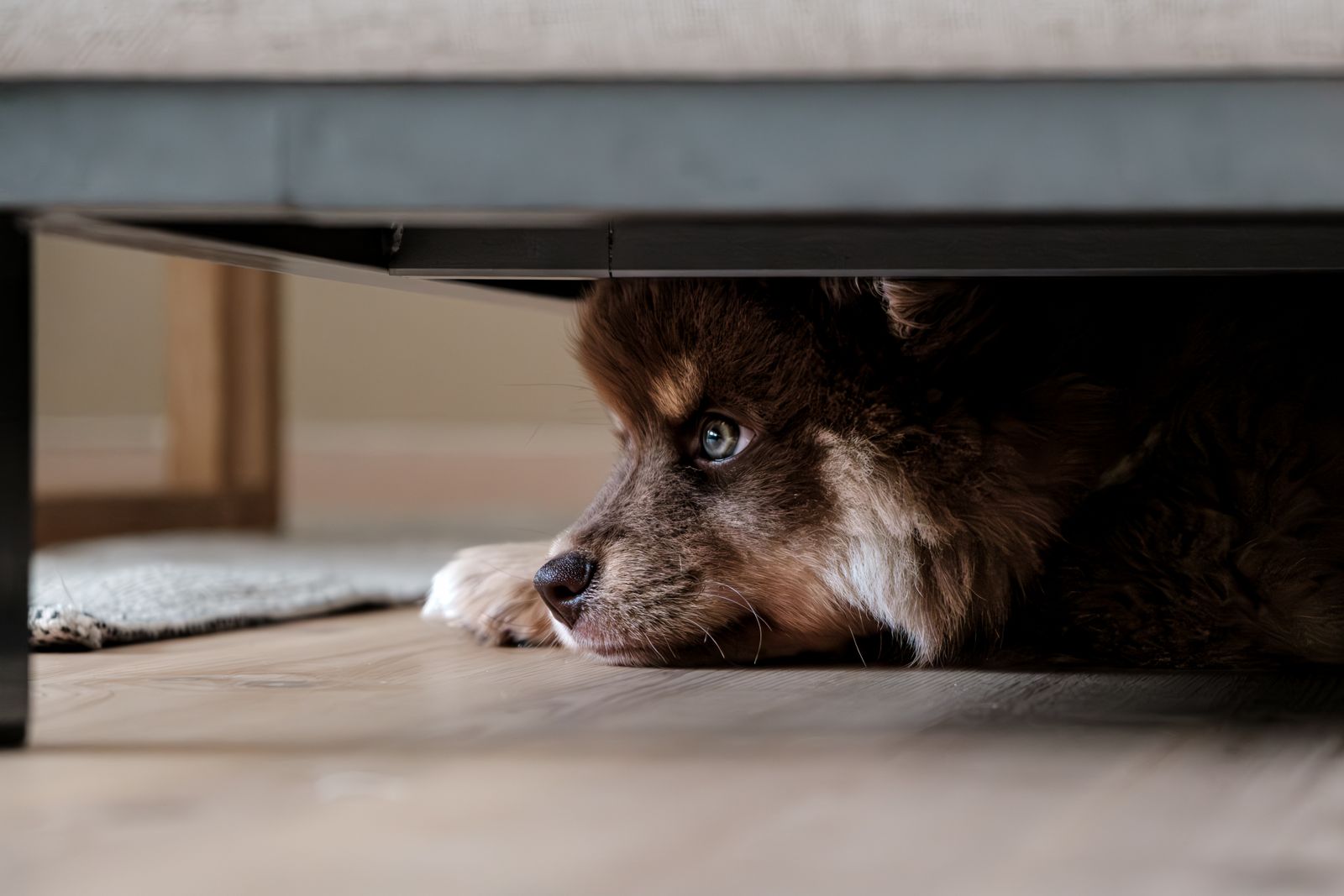
The first bang always comes without warning. One moment your dog was lying relaxed on his bed, and the next he's standing in the hallway trembling, ears flat, his eyes somewhere between panic and accusation. You might recognize this scene from the Fourth of July, from New Year's Eve, or from a summer festival down the street. And right now you might be thinking: the next New Year's Eve is still a long way off.
hat's exactly the point. New Year's Eve isn't decided in December, it's decided in the months before. What helps your dog on the night itself can be planned in five steps. What actually shrinks his fear for good takes lead time, and the ideal moment to start is right now, in the middle of summer. Let's walk through both.
Fireworks anxiety is one of the most common behavior problems in dogs, period. Depending on the study, up to one in three dogs is affected. It isn't a quirk, it's real fear, and it rarely goes away on its own.
On the night itself, five things help: a long sniffing walk in the afternoon, a safe retreat spot, closed blinds and a calm soundscape, your relaxed presence, and really good treats timed exactly to the bangs. Comforting your dog is allowed; the old idea that "it reinforces the fear" is a myth. Long term, the biggest lever is training with sound recordings, and because that takes months, summer is the best time to start if you want a calmer New Year's Eve. If your dog is in real panic, he belongs in a vet's hands; there are effective medications for that today.
Dogs hear far better than we do, especially at low volumes and high frequencies. A firecracker that makes us flinch hits a dog with an entirely different force. Then there's the unpredictability: a thunderstorm announces itself, but fireworks explode out of nowhere, sometimes alone, sometimes in bursts, sometimes close, sometimes far away. Your dog can't detect a pattern, so he stays braced the entire time.
There's good news here that often gets lost. Fireworks are, at their core, an acoustic event. Unlike thunderstorm anxiety in dogs, where wind, lightning and air pressure all play a role, a bang can be recreated fairly well with sound recordings. That's exactly why fireworks anxiety tends to respond comparatively well to training, given enough time.
One more thing is reassuring: fireworks anxiety isn't a one-way street. In a longitudinal study, around 40 percent of affected dogs improved over time, though a good quarter got worse. Which side your dog ends up on depends heavily on what you do from here.
Whether it's New Year's Eve, a town festival, or a wedding with a surprise fireworks show: if you know the night is going to be loud, you can plan your dog's day around it. These five steps work well:
That fifth step, by the way, isn't a nice bonus, it's the single most effective tool of the whole night. In a large survey of over 1,200 dog owners, food or play timed exactly to the bangs was the most successful individual measure of all: more than 70 percent reported that it helped. More than any product you can buy.
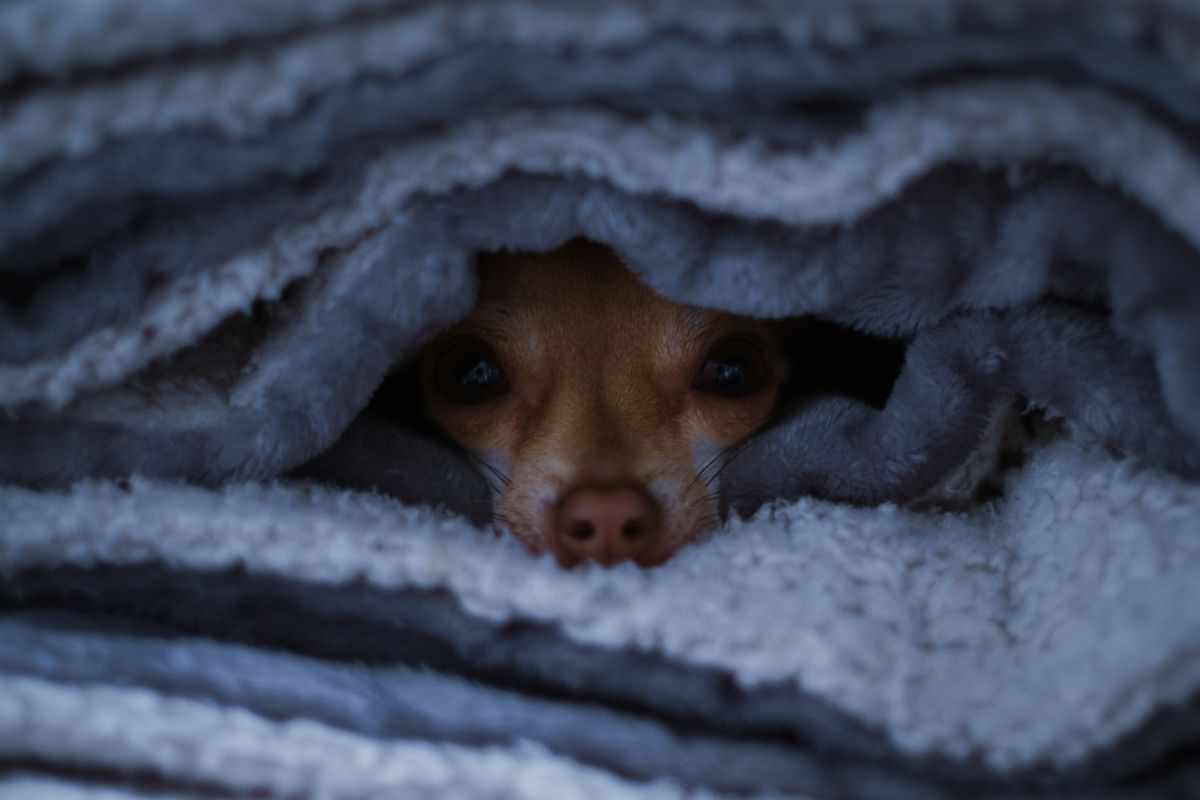
If anyone has ever told you not to comfort your anxious dog because you'll "reward the fear," that advice is outdated. Fear is an emotion, not a behavior, and you can't train an emotion into existence through affection. Studies even show that calm petting and soothing talk can lower an anxious dog's heart rate, as long as the dog is the one seeking out the contact. One reason is oxytocin, the bonding hormone released by calm touch, which measurably dampens stress.
What matters is your own demeanor: calm rather than frantic, a soothing voice rather than anxious hand-wringing. We wrote in detail about why the comforting myth is so persistent, and what behavioral medicine actually says today, in our piece on thunderstorm anxiety in dogs.
The principle is called desensitization with counterconditioning, and it's simpler than it sounds. You start by playing fireworks sounds so quietly that your dog barely notices them. At exactly that volume, he gets the best treats there are. If he stays relaxed over several sessions, you turn the volume up just slightly. If he shows tension, you moved too fast: go back one step. That's how you work your way forward over the weeks, always staying below the threshold where the fear kicks in.
Why the long lead time? First, because small steps take time; if you start in December, you'll have to rush, and rushing is the opposite of what this training needs. Second, because the training only works during stretches when real fireworks aren't constantly interrupting the process. Summer gives you exactly that calm stretch running up to the end of the year.
In fairness, recordings aren't the whole reality. The vibration, the smell, the light of real fireworks are all missing, and some dogs don't react to speaker bangs at all even though they tremble at the real thing. Still, the training is well supported: in surveys, it noticeably helped more than half of dogs. If you also build a relaxation cue, something like a calm "go to your mat" paired with a slow exhale, you'll have a second strong tool in hand on New Year's Eve. For pronounced fear, it's worth bringing in a veterinary behaviorist or a qualified trainer.
These points are uncomfortable but important, because in a panic, seconds decide everything. A startled dog can wriggle out of his collar and bolt blindly. Around fireworks nights, shelters regularly report a noticeable spike in lost dogs.
That's why on nights like these: leash only, even for dogs who normally reliably run free. When in doubt, double up on security with a harness and a backup connection to the collar, the same way we describe for newly adopted dogs in our piece on settling in a rescue dog. Keep doors and windows shut, and make sure your dog is secured if the doorbell rings. And: don't leave a dog with fireworks anxiety home alone on a night like this. Your presence is half the battle.
If your dog stops eating, pants, drools, or trembles for hours on the night itself, that's not something to just wait out. Talk to your vet's office well before the holiday, not on December 30th. There are modern medications, such as an oromucosal gel with the active ingredient dexmedetomidine, approved specifically for situational noise anxiety that dampen the fear itself, instead of just leaving your dog unable to move. That was exactly the problem with older sedatives: the dog lay still while the panic kept running underneath. Purely sedating drugs like that are now considered outdated.
One point that often gets overlooked: noise anxiety and pain are connected. Dogs with undetected pain, in the joints for example, more often develop noise anxiety that's also more generalized, likely because flinching at the bang hurts, which burns the fright in twice as deep. If your dog suddenly becomes noise-sensitive later in life, a thorough health check should be part of the picture. Read more about when a behavior change means a vet visit in Dog Suddenly Acting Different.
Compression wraps, pheromones, calming chews: keep your expectations modest. In owner surveys, a compression wrap helped in a little over 4 out of 10 cases, while pheromone diffusers and calming supplements performed barely better than a placebo. They won't do any harm, so trying one is fine. They just don't replace training, or, in cases of severe fear, the vet.
If a puppy just joined your household, you have a head start plenty of people would envy. Young dogs who learn about sounds early, gently, and with positive associations go on to develop fireworks anxiety far less often. In one study, early-trained dogs scored at the best possible mark on an impairment scale on average, while untrained dogs scored far higher.
In practice, that means quiet sound recordings starting in puppyhood, always paired with food and play, never startling him, never overwhelming him. A few minutes here and there is enough; the best prevention doesn't need more than that.
For a lot of dog owners, fireworks anxiety feels like an inescapable fate that descends on their dog fresh every year. It isn't. You have a plan for the night itself, you know the training that changes things for good, and you know when it's time to bring in the vet. Summer gives you exactly the calm months this training needs.
If you'd like some support staying consistent, Souldog can help: log behavior observations for your dog in the app and watch how his reactions shift over the weeks. Then, eventually, New Year's Eve goes back to being what it should be: an evening with takeout and a tired dog under the table. No drama required.
For the organizational side of the evening itself, from the vet appointment for anti-anxiety medication to the chip check to the morning after, see our New Year's Eve plan for dogs.
 Souldog